
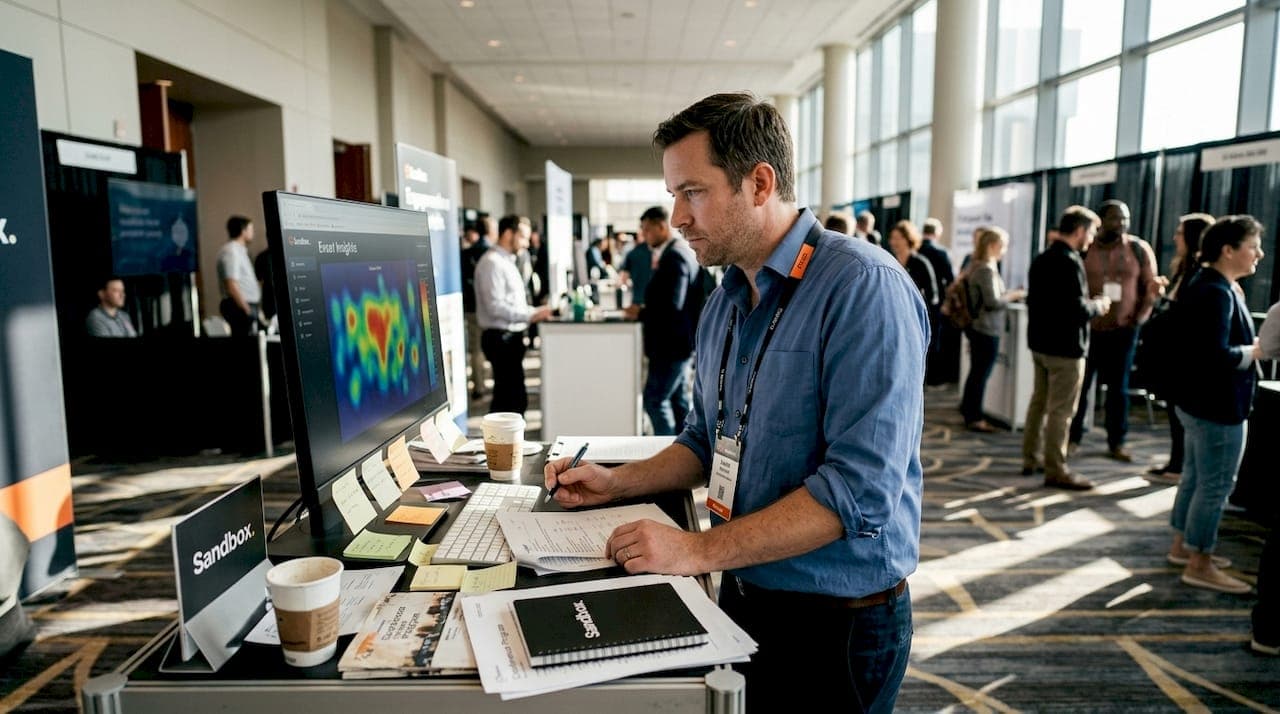
Most B2B event marketers celebrate when 200 people show up, but here's what really matters: average attendance hits 52% while session completion soars near 99%. That gap reveals everything. Raw headcount tells you who walked through the door. Engagement tracking shows who cares, what they want, and how likely they are to buy. If you're still measuring event success by attendance alone, you're missing the signal that drives revenue. This guide breaks down why tracking engagement transforms events from cost centers into growth engines, and how to do it right in 2026.
Table of Contents
- Why tracking event engagement matters in B2B marketing
- Common challenges and pitfalls in tracking event engagement
- How to track event engagement effectively: metrics and methods
- Enhance your event tracking with Sandbox solutions
- Frequently asked questions
Key takeaways
| Point | Details |
|---|---|
| Engagement reveals intent | Tracking interactions uncovers which attendees are genuinely interested and ready to convert. |
| Real-time data drives results | Companies using live engagement tracking are 1.5x more likely to exceed revenue goals. |
| Focus on meaningful metrics | Prioritize multi-touch signals like booth visits and polling over vanity metrics like raw attendance. |
| Overcome data fragmentation | Fragmented systems and privacy changes create tracking gaps that require strategic solutions. |
| Enable smarter follow-up | Rich engagement data powers better lead scoring and personalized post-event outreach. |
Why tracking event engagement matters in B2B marketing
Attendance numbers look impressive on post-event reports, but they don't tell you who to call first on Monday morning. You need to know which prospects spent 45 minutes at your booth asking detailed questions versus someone who grabbed a branded pen and left. Engagement tracking captures that difference.
When you measure how attendees interact with your content, sessions, and team, patterns emerge. Events generate 574 messages on average and 82% of participants engage through mobile apps. Those interactions create a behavioral fingerprint that reveals buying intent far better than a badge scan ever could. Someone who attends three product demos, downloads two whitepapers, and asks questions in live polling isn't just interested. They're evaluating.
This depth of insight transforms how you approach follow-up. Instead of sending generic thank-you emails to everyone, you can personalize outreach based on specific interests demonstrated through engagement. The marketing manager who attended your pricing session gets different messaging than the executive who only showed up for the keynote. This precision matters because engaged attendees convert at significantly higher rates than passive participants.
Think about it from a qualification perspective:
- Session attendance shows topic interest and time investment
- Polling responses reveal pain points and priorities
- Booth conversations indicate evaluation stage and decision authority
- Content downloads demonstrate research behavior and information needs
Each data point adds context that helps your sales team have better conversations. When integrated with marketing automation platforms, this engagement data flows directly into lead scoring models and nurture sequences. You're not just tracking for the sake of metrics. You're building a system that connects event activity to pipeline growth.
"The difference between a good event and a great one isn't the number of attendees. It's the quality of interactions and your ability to act on them."
Engagement tracking also helps you optimize future events. When you know which sessions drove the most meaningful interactions, you can double down on those topics. If certain booth activities generated qualified conversations while others fell flat, adjust your approach. This continuous improvement cycle only works when you have granular data about what actually happened, not just who showed up. Applying proven lead generation strategies becomes much easier when you understand engagement patterns.
Common challenges and pitfalls in tracking event engagement
Collecting data is easy. Collecting useful data is hard. Too many event teams deploy every tracking tool available and end up drowning in metrics they never analyze. You don't need to know how many times someone opened the event app if that information doesn't change your follow-up strategy. Start with clear objectives about what you want to learn, then choose metrics that answer those specific questions.
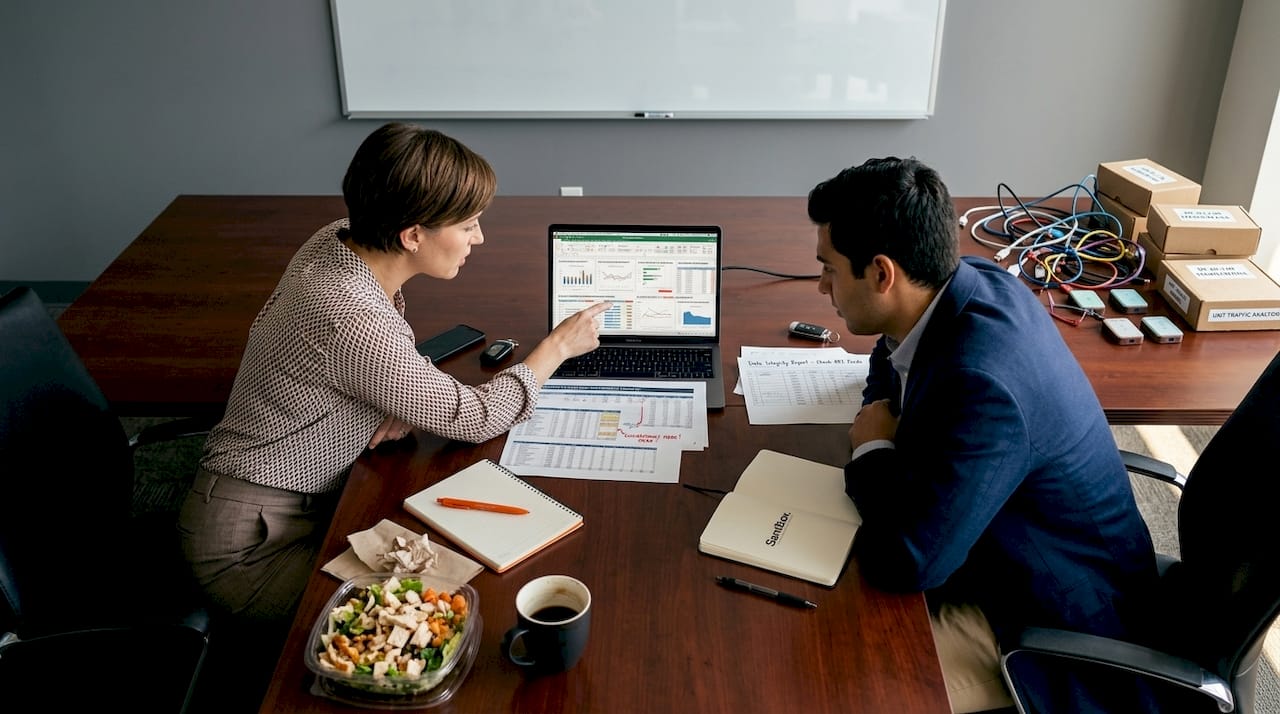
Fragmentation creates another major headache. Your event platform tracks session attendance. Your booth staff logs conversations in a CRM. Your content team monitors downloads through a separate system. Your mobile app captures engagement through yet another dashboard. When these systems don't talk to each other, you get incomplete pictures of individual attendee journeys. Attribution blind spots emerge from fragmented data, and privacy limitations can create up to 40% data gaps in your tracking.
Privacy regulations add complexity to an already challenging landscape. Cookie restrictions and consent requirements mean you can't track as comprehensively as you could five years ago. Some attendees opt out of tracking entirely. Others use privacy-focused browsers that block common analytics scripts. You need backup strategies that don't rely solely on digital tracking, like structured booth conversations and intentional networking sessions that capture engagement through human interaction.
Manual data collection sounds thorough but rarely scales. Having booth staff take detailed notes about every conversation creates inconsistent records that are hard to aggregate. One person's "very interested" might be another person's "somewhat engaged." Without standardized frameworks, you can't compare engagement across different touchpoints or team members. Automation solves this, but only if you implement it thoughtfully.
Consider these common tracking mistakes:
- Measuring everything without prioritizing what matters most
- Treating all engagement types as equally valuable regardless of intent signals
- Ignoring the time dimension (early event engagement differs from late event behavior)
- Failing to connect event data with existing customer and prospect records
- Over-relying on single-touch metrics instead of multi-touch attribution
Pro Tip: Before adding any new tracking mechanism, ask yourself exactly how that data will change a specific decision or action. If you can't articulate a clear use case, skip it and focus on metrics that directly inform follow-up prioritization or event design improvements.
The solution isn't less tracking. It's smarter tracking aligned with your actual business goals. Define what success looks like for your event program, identify which behaviors indicate progress toward that success, then build measurement systems around those specific signals. Event segmentation strategies help you focus on meaningful cohorts rather than treating all attendees as a homogeneous group.
How to track event engagement effectively: metrics and methods
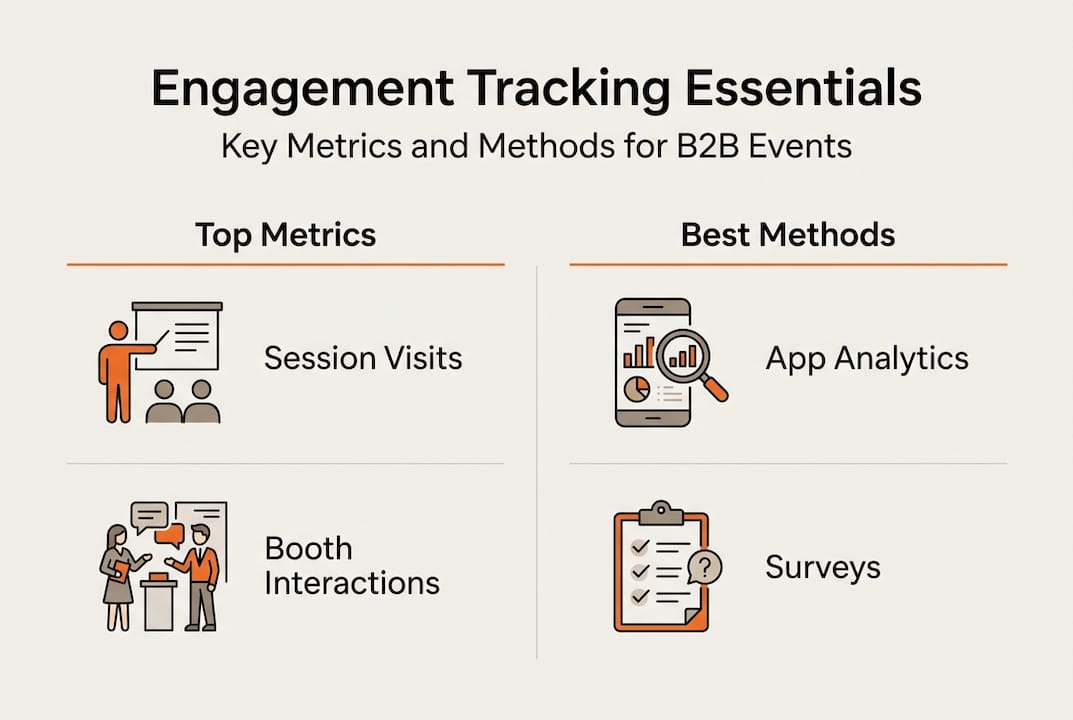
Effective engagement tracking starts with multi-touch measurement across the entire event journey. Don't just count who attended which session. Track booth dwell time, conversation depth, content interactions, app activity, networking connections made, and questions asked during live Q&A. Each touchpoint reveals different aspects of intent and interest. Someone might skip your product demo but spend 20 minutes reading case studies in your resource center. That's valuable signal.
Machine learning transforms raw engagement data into actionable intelligence. Instead of manually reviewing hundreds of attendee profiles, ML models can weigh different signals by their correlation with eventual conversion. Hybrid events deliver 40% higher satisfaction, and companies using real-time tracking are 1.5x more likely to exceed revenue goals. These models learn which combinations of behaviors indicate serious buying intent versus casual interest, then score leads accordingly.
Real-time tracking gives you the power to adjust tactics while the event is still happening. If a particular session generates intense engagement and follow-up questions, you can add an impromptu breakout discussion or extend networking time. If booth traffic is slow in the morning but picks up after lunch, shift your team's schedule to match attendee behavior. Static post-event analysis can't capture these optimization opportunities.
Here's a practical framework for choosing engagement metrics:
- Identify your primary event goal (pipeline generation, product education, relationship building)
- Map attendee behaviors that indicate progress toward that goal
- Select 5 to 7 core metrics that capture those behaviors across different touchpoints
- Implement tracking systems that automatically collect and aggregate these metrics
- Create scoring models that weight metrics by their correlation with desired outcomes
- Build dashboards that surface actionable insights for sales follow-up
Pro Tip: Include post-event on-demand content views in your engagement analysis. Someone who watches three recorded sessions in the week after your event is showing sustained interest that's often more valuable than passive in-person attendance. Calibrate engagement scores by business intent rather than treating all interactions equally.
Compare different tracking approaches to find what fits your program:
| Approach | Best For | Key Advantage | Limitation |
|---|---|---|---|
| Mobile app analytics | Tech-savvy audiences | Rich behavioral data | Requires app adoption |
| Badge scanning | Booth and session tracking | Universal compatibility | Limited interaction depth |
| Integrated event platforms | Comprehensive programs | Unified data model | Higher implementation cost |
| Manual CRM logging | Relationship-focused events | Qualitative context | Doesn't scale well |
Avoid vanity metrics that look impressive but don't correlate with business outcomes. Total app opens, email click rates without conversion context, and raw session attendance numbers fall into this category. They might make your executive summary look good, but they won't help your sales team prioritize outreach or inform your event strategy for next quarter.
The most sophisticated tracking systems connect event engagement data directly to your CRM and marketing automation platform. When a prospect attends your event, their engagement score should automatically update their lead record, trigger appropriate nurture sequences, and alert the assigned sales rep with specific talking points based on demonstrated interests. This closed-loop system is what transforms event tracking from a reporting exercise into a conversion optimization engine that drives measurable revenue impact.
Don't forget the human element. Quantitative tracking tells you what happened. Qualitative feedback tells you why. Combine engagement metrics with post-event surveys, sales team debriefs, and direct attendee conversations to build complete understanding. The goal isn't perfect measurement. It's actionable insight that improves outcomes. Focus your tracking efforts on capturing the signal that matters most for your specific business context and event objectives. Effective post-event engagement processes depend on having the right data at the right time.
Enhance your event tracking with Sandbox solutions
Tracking engagement effectively requires more than good intentions. You need integrated systems that capture multi-touch interactions, connect event data to your broader GTM motion, and surface actionable insights when they matter most. That's exactly what Sandbox delivers.
Our platform treats events as a first-class growth channel by turning high-intent moments into measurable signal. We help you understand who to follow up with, why they matter, and what to do next by capturing real intent across meetings, content, and live interactions. Whether you're running your first program or scaling a flagship conference, Sandbox provides the systems and support to make events accountable and worth repeating. Discover how event marketing workflows can boost your ROI and efficiency in 2026.
Frequently asked questions
What are the most important event engagement metrics to track?
Start by defining metrics aligned with your specific business goals rather than tracking everything possible. Prioritize interactions that indicate genuine intent: session attendance duration, polling participation, booth conversation depth, content downloads, and networking connection quality. Post-event on-demand content views often reveal sustained interest that's more valuable than passive in-person attendance. In complex B2B sales cycles, apply multi-touch attribution models that recognize how different engagement types contribute to eventual conversion. The right metrics depend on whether you're focused on pipeline generation, product education, or relationship building. Learn more about conversion optimization strategies to maximize your event impact.
How do privacy regulations impact event engagement tracking?
Privacy changes significantly limit tracking effectiveness and data completeness across digital channels. Cookie restrictions create up to 40% data gaps in attribution models, and consent requirements mean some attendees opt out entirely. Adapt by implementing consent-based tracking that respects attendee preferences while still capturing valuable signal. Diversify your data sources beyond digital tracking to include structured booth conversations, intentional networking sessions, and direct feedback mechanisms. The key is building measurement systems that don't rely solely on cookies or third-party tracking technologies that are increasingly restricted.
What is the role of machine learning in event engagement analysis?
Machine learning models weigh different engagement signals by their correlation with actual business outcomes rather than treating all interactions equally. ML-powered scoring systems learn which combinations of behaviors indicate serious buying intent versus casual interest, enabling smarter lead prioritization. These models continuously improve as they process more data, identifying patterns humans might miss. This enables data-driven follow-up strategies where sales teams focus on prospects showing the strongest engagement signals. The result is more efficient resource allocation and higher conversion rates from event-generated pipeline.
How can I connect event engagement data to revenue outcomes?
Integrate your event tracking systems directly with your CRM and marketing automation platform to create closed-loop attribution. Tag event attendees in your database, track their progression through your sales funnel, and measure how engagement intensity correlates with deal velocity and close rates. Build custom reports that show pipeline generated, influenced, and accelerated by event participation. This requires consistent data hygiene and clear definitions of how event touchpoints contribute to multi-touch attribution models. Over time, you'll identify which types of engagement predict revenue most reliably, allowing you to optimize future events for maximum business impact.