
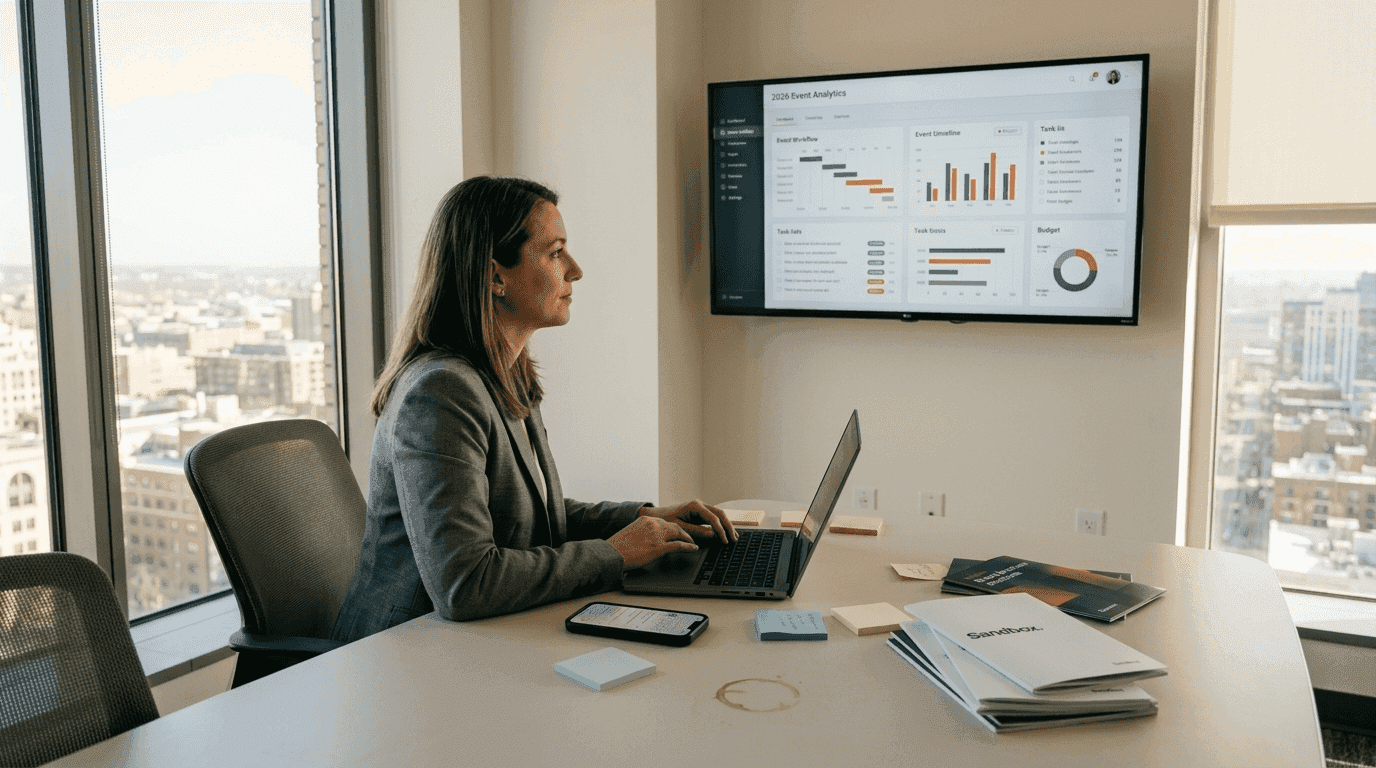
Running B2B events means juggling hundreds of moving parts while stakeholders demand measurable pipeline impact. Event marketers face mounting pressure to personalize attendee experiences, follow up instantly, and prove ROI, all while managing logistics manually. Event marketing automation solves these challenges by handling repetitive workflows, delivering data-driven personalization, and connecting every touchpoint to revenue outcomes. This article breaks down the concrete benefits you'll gain from automation in 2026, from reclaiming your team's time to scaling hybrid programs that drive real business results.
Table of Contents
- How Automation Streamlines Repetitive Event Marketing Tasks
- Boosting Personalization And Attendee Engagement With Data And AI
- Measuring ROI And Pipeline Impact Through Integrated Workflows
- Enhancing Operational Efficiency And Scaling Hybrid Events
- Discover Sandbox To Maximize Your Event Marketing ROI
- Frequently Asked Questions
Key takeaways
| Point | Details |
|---|---|
| Time savings | Automation handles invitations, registration, and follow-ups so your team focuses on strategy instead of admin work. |
| Personalization at scale | AI-driven segmentation and tailored messaging boost engagement rates and attendee satisfaction across all touchpoints. |
| Measurable ROI | Integrated CRM workflows and lead scoring connect event activity directly to pipeline and revenue metrics. |
| Hybrid event support | Automation streamlines complex virtual and in-person logistics, enabling you to scale programs without adding headcount. |
How automation streamlines repetitive event marketing tasks
B2B event marketing involves countless manual tasks that consume hours every week. Your team sends invitation emails, manages registration confirmations, schedules reminder sequences, and coordinates post-event follow-ups. Each step requires careful timing and personalization, but doing this manually for hundreds or thousands of contacts creates bottlenecks and errors. Automation eliminates these pain points by handling the repetitive work while you focus on strategic decisions that move the needle.
Seventy-five percent of marketers use automation for efficiency, and the impact on engagement is dramatic. Personalized automated emails boost open rates by 29% and click rates by 41% compared to generic blasts. When you set up events marketing automation unlock roi 2026 workflows, the system triggers the right message to the right person at the perfect moment based on their behavior and profile data.
Common tasks automation handles include:
- Sending segmented invitation campaigns based on industry, role, or past event attendance
- Delivering registration confirmations and calendar invites instantly without manual intervention
- Triggering reminder sequences at optimal intervals before the event date
- Scheduling personalized follow-up emails based on session attendance and engagement level
- Updating CRM records automatically as contacts interact with event content
The time savings add up quickly. Teams report reclaiming 10 to 15 hours per week previously spent on manual email coordination and data entry. This capacity shift lets marketers invest in higher-value activities like refining messaging strategy, analyzing performance data, and building relationships with key accounts. Post-event engagement optimization becomes feasible when automation handles the execution while you guide the strategy.

Pro Tip: Start by automating your most time-consuming workflow first, typically post-event follow-up sequences. Measure the time saved and engagement lift, then expand automation to other touchpoints once you've proven the value internally.
Boosting personalization and attendee engagement with data and AI
Generic event marketing falls flat with today's B2B buyers who expect relevant, timely content. Automation platforms use behavioral data and AI to segment your audience and deliver personalized experiences that feel human, not robotic. The result is deeper engagement, higher conversion rates, and attendees who actually remember your event.
Effective event segmentation tips start with your data. Automation tools analyze demographic attributes like company size, industry, and job title alongside behavioral signals such as email opens, content downloads, and past event attendance. AI algorithms identify patterns and create dynamic segments that update in real time as contacts take actions. This means a prospect who downloads your white paper automatically moves into a higher-intent segment and receives more targeted event invitations.
Personalization tactics that drive engagement:
- Dynamic email content that changes based on recipient industry or role, highlighting relevant sessions
- Behavioral triggers that send targeted messages when contacts visit specific web pages or engage with content
- AI-generated subject lines and send-time optimization that adapts to individual recipient patterns
- Personalized event agendas and session recommendations based on stated interests and past behavior
- Custom landing pages that speak directly to segment-specific pain points and goals
Brand consistency boosts revenue up to 23%, and AI personalization lifts revenue between 5% and 15% by delivering the right message at scale. When automation handles personalization logic, you maintain consistent branding while tailoring every touchpoint to individual needs. The technology removes the manual work of creating dozens of email variants while ensuring each recipient gets content that resonates.
The engagement impact is measurable. Teams using advanced segmentation and personalization see 40% to 60% higher email open rates and 25% to 35% increases in event registration conversions compared to one-size-fits-all campaigns. Attendees spend more time engaging with personalized content and are twice as likely to attend future events when their experience feels relevant and valuable.
Measuring ROI and pipeline impact through integrated workflows
Proving event ROI remains the top challenge for B2B marketers, but automation solves this by connecting every interaction to your CRM and revenue data. Integrated workflows track attendees from first touchpoint through closed deals, giving you clear visibility into which events drive pipeline and which need optimization.
CRM integration creates a closed-loop system where event data flows automatically into your sales platform. When a contact registers, attends sessions, or engages with post-event content, that activity updates their lead score and triggers appropriate sales follow-up. Your sales team sees exactly who attended, what they engaged with, and why they matter, eliminating the typical post-event communication gap.
| Metric | Manual Process | Automated Workflow |
|---|---|---|
| Post-event engagement rate | 15-25% | 40-60% |
| Time to first follow-up | 3-5 days | Same day |
| Lead scoring accuracy | 60-70% | 85-95% |
| Attribution visibility | Limited | Full funnel |
| ROI measurement | Estimated | Precise |
Forty to sixty percent higher post-event engagement comes from automated follow-up sequences that reach contacts while your event is still fresh in their minds. Systems that integrate event platforms with CRM and marketing automation deliver 10x ROI by ensuring no lead falls through cracks and every interaction gets captured. Forty-seven percent of B2B marketers rank events as their highest ROI channel when they have proper measurement systems in place.
Lead scoring workflows assign points based on event behaviors like session attendance, booth visits, and content downloads. High-scoring leads trigger immediate sales alerts while lower-intent contacts enter nurture sequences. This intelligent routing ensures your sales team focuses on prospects most likely to convert while marketing continues warming cooler leads. B2B event lead generation strategies work best when automation handles the scoring logic consistently across all events.
Pro Tip: Set up automated follow-up sequences that trigger within 24 hours of event conclusion. Speed matters tremendously in B2B sales, and contacts who receive timely, relevant follow-up are 3x more likely to engage than those who wait a week for outreach.
Enhancing operational efficiency and scaling hybrid events
Hybrid and virtual events add complexity that manual processes simply cannot handle at scale. Automation manages the logistics of coordinating in-person and online experiences while maintaining consistent engagement across both formats. This operational efficiency lets you run more events, reach broader audiences, and scale programs without proportionally increasing team size.
The shift to hybrid formats requires managing multiple registration paths, content delivery methods, and engagement touchpoints simultaneously. Automation platforms orchestrate these workflows, ensuring virtual attendees get access links while in-person guests receive venue details, all triggered by registration type. Post-event, the system segments follow-up based on attendance format and engagement level, delivering relevant next steps to each group.
Operational improvements automation delivers:
- Unified registration handling both virtual and in-person attendees with appropriate communications for each
- Automated access provisioning for virtual platforms based on registration status and payment
- Real-time engagement tracking across physical and digital touchpoints for complete attendee visibility
- Coordinated multi-channel promotion across email, social, and web with consistent messaging
- Streamlined team collaboration with automated task assignments and status updates
| Metric | Manual Management | Automated Workflows |
|---|---|---|
| Campaign creation time | 2-3 weeks | 3-5 days |
| Email open rates | 18-22% | 28-35% |
| Click-through rates | 2-3% | 4-6% |
| Hours saved weekly | 0 | 12-18 |
| Registration errors | 5-8% | Under 1% |
Fifteen to twenty-five percent gains in open and click rates come from automation that optimizes send times and personalizes content at scale. Campaign creation accelerates by 50% when templates and workflows handle repetitive setup tasks. Teams save 12 to 18 hours weekly by eliminating manual data entry, list management, and coordination tasks that automation handles automatically.
The scalability advantage becomes clear when you run multiple events simultaneously. Event marketing workflows boost ROI by letting one marketer manage several programs that would previously require dedicated staff for each. Automation maintains quality and consistency across all events while freeing your team to focus on strategic improvements rather than operational execution.
Discover Sandbox to maximize your event marketing ROI
You've seen how automation transforms event marketing from a logistics exercise into a measurable growth channel. Sandbox takes these benefits further by treating events as first-class GTM signal, not just attendance numbers. Our platform captures real intent across meetings, content, and live interactions, then tells you exactly who to follow up with, why they matter, and what to do next.
Sandbox combines opinionated workflows with hands-on execution support, helping you generate demand, accelerate conversions, and connect every event touchpoint directly to pipeline and revenue. Whether you're launching your first automated program or scaling a flagship conference, our systems provide the signal and support to make event marketing workflows boost ROI efficiency repeatable and accountable. Explore the Sandbox platform to see how we turn high-intent event moments into measurable business outcomes.
Frequently asked questions
How does automation improve event marketing effectiveness?
Automation improves effectiveness by eliminating manual tasks, enabling real-time personalization, and connecting event activity directly to CRM and revenue data. Teams using automation see 40% to 60% higher engagement rates and can prove clear ROI through integrated attribution.
What types of event tasks can automation handle?
Automation manages invitations, registration workflows, reminder sequences, access provisioning, post-event follow-up, lead scoring, and CRM updates. It handles both simple tasks like confirmation emails and complex workflows like dynamic content personalization based on attendee behavior.
How does integrating automation with CRM impact ROI?
CRM integration creates closed-loop attribution that tracks attendees from first touch through closed deals. This visibility lets you measure which events drive pipeline, optimize follow-up timing, and ensure sales teams have complete context on every lead. Integrated systems deliver up to 10x ROI compared to disconnected tools.
How can I ensure personalization with automation without losing human touch?
Focus automation on execution while keeping strategy and messaging human. Use behavioral data to trigger relevant content, but write emails in your brand voice with genuine value. Reserve automation for timing and targeting decisions while your team crafts the actual messages and determines strategic direction.
What metrics should I track to measure event automation success?
Track engagement metrics like email open and click rates, registration conversion rates, and post-event follow-up response rates. Measure operational efficiency through time saved and campaign creation speed. Most importantly, monitor pipeline metrics including lead quality scores, sales-accepted leads, and revenue attributed to events.