

Event marketing often underperforms because teams focus on logistics instead of revenue. You spend months planning conferences, trade shows, and webinars, yet struggle to prove their impact on pipeline. This disconnect costs companies millions in missed opportunities every year. The solution isn't more events or bigger budgets. It's treating events as a strategic growth channel with measurable outcomes. This guide delivers actionable frameworks and proven tactics to transform your event marketing in 2026, connecting every activity to engagement metrics and revenue results that matter.
Table of Contents
- Why Traditional Event Marketing Strategies Fall Short
- Preparing Your Event Marketing Strategy: Goal Setting And Frameworks
- Executing High-Impact Engagement Tactics That Drive ROI
- Maximizing Event ROI Through Measurement And Ongoing Engagement
- Discover Sandbox-GTM's Event Marketing Solutions
- Frequently Asked Questions
Key takeaways
| Point | Details |
|---|---|
| Revenue-focused frameworks | Shifting from logistics-only planning to revenue-driven strategies dramatically improves event ROI |
| Pre-event engagement tactics | Personalized quizzes and targeted email campaigns boost social sharing and registration rates |
| SMART goals are essential | Setting specific, measurable objectives ensures every event activity connects to trackable outcomes |
| Measurement drives improvement | Tracking KPIs across pre-event, during-event, and post-event phases reveals optimization opportunities |
| Year-round event ecosystems | Treating events as continuous revenue infrastructure multiplies long-term ROI beyond single touchpoints |
Why traditional event marketing strategies fall short
Most event marketing strategies prioritize execution over outcomes. Your team books venues, manages vendors, and coordinates schedules, but these logistics-focused activities rarely connect to revenue goals. Treating events as logistics projects can lead to missed revenue opportunities because you optimize for attendance numbers instead of qualified engagement. This approach made sense when events were networking exercises, but today's buyers expect personalized experiences that solve specific challenges.
The traditional B2B event playbook creates three critical gaps. First, you lack frameworks connecting booth conversations to pipeline velocity. Second, your measurement stops at registration counts instead of tracking influenced revenue. Third, you treat each event as a standalone project rather than part of an integrated growth system. These gaps explain why executives question event budgets despite your team's hard work.
Consider what happens when logistics dominate your planning:
- Teams spend 80% of time on operational details, 20% on strategy
- Success metrics focus on attendee satisfaction scores, not revenue impact
- Post-event follow-up relies on generic email blasts instead of intent signals
- Budget conversations center on cost per attendee rather than cost per qualified opportunity
A revenue-focused framework flips this model. You start with business objectives, then design event experiences that generate measurable intent signals. Every session, conversation, and content piece becomes data that informs sales prioritization. This shift requires different planning conversations, but the payoff is substantial. Instead of defending event ROI, you demonstrate how events accelerate deals and expand accounts.
The change begins with recognizing that B2B event lead generation strategies must evolve beyond badge scans and booth traffic. Modern event marketing captures behavioral signals that reveal purchase intent, timeline urgency, and stakeholder involvement. These insights transform events from awareness activities into revenue engines.
Preparing your event marketing strategy: goal setting and frameworks
Effective event marketing starts with crystal-clear objectives. Setting SMART goals and KPIs is crucial for measuring the success of an event because vague aspirations like "increase brand awareness" provide no actionable direction. Instead, define specific targets: generate 150 qualified leads, influence $2M in pipeline, or achieve 40% attendee-to-meeting conversion within 30 days post-event.
Your SMART goals should follow this structure:
- Specific: Target exact outcomes like "secure 25 executive meetings" not "improve engagement"
- Measurable: Attach numbers to every objective so you can track progress in real time
- Achievable: Set ambitious yet realistic targets based on historical performance and market conditions
- Relevant: Align event goals with quarterly revenue targets and strategic account priorities
- Time-bound: Establish clear deadlines for pre-event, during-event, and post-event milestones
Once you've defined goals, build a framework connecting every event activity to revenue outcomes. This framework should map attendee journeys from initial registration through post-event nurture, identifying where you'll capture intent signals and how sales will act on them. For example, if your goal is accelerating enterprise deals, your framework might prioritize VIP dinners with decision makers over general networking sessions.
Develop KPIs that reflect genuine business impact. Track registration rates to measure marketing effectiveness, but also monitor metrics like average deal size influenced by event attendance, sales cycle reduction for event participants, and retention rates for customers who attend user conferences. These deeper metrics justify budgets and guide strategic decisions about which event types deserve investment.
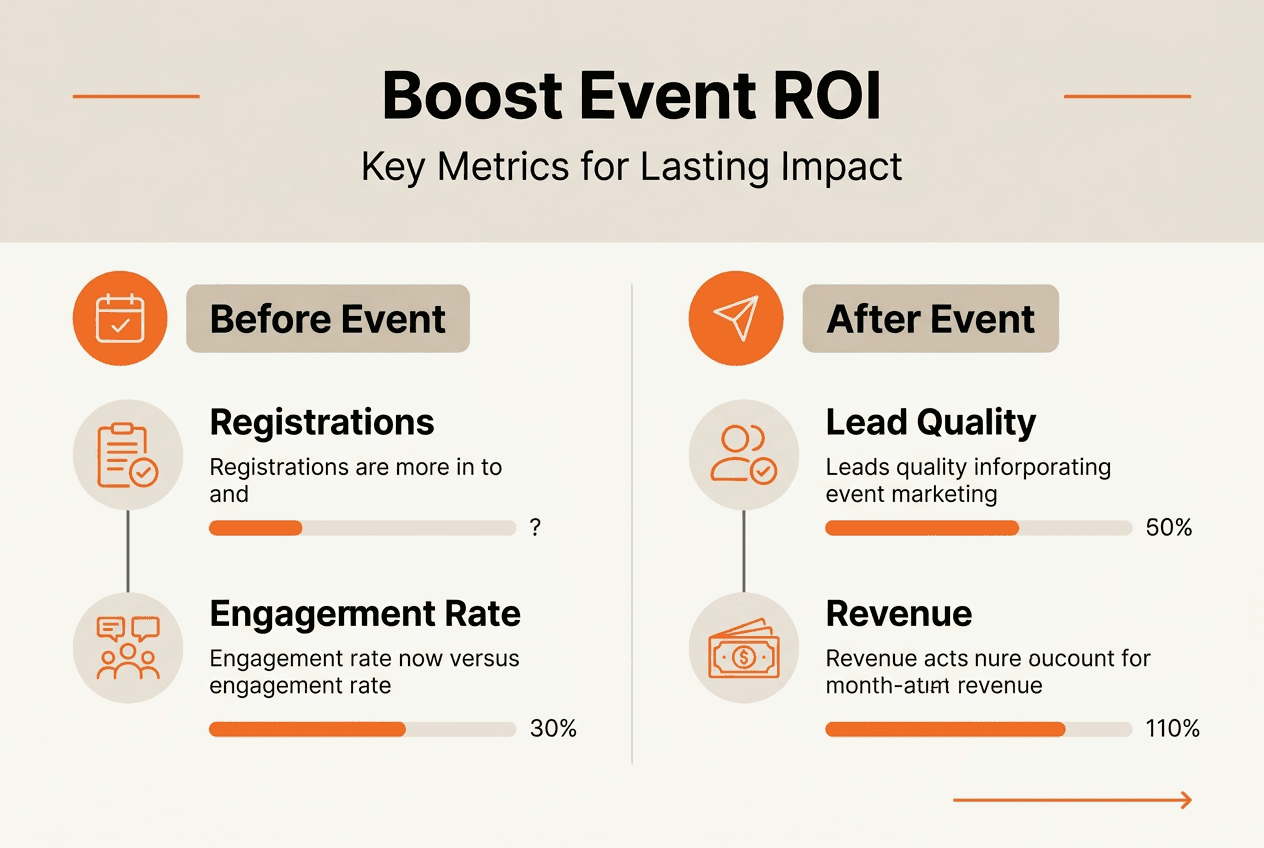
Pro Tip: Prioritize goals that enhance post-event revenue streams by designing experiences that naturally lead to ongoing engagement, not one-time interactions.
Your framework should also address technology integration. Identify which tools will capture registration data, track session attendance, score engagement levels, and sync insights to your CRM. This infrastructure enables the real-time visibility that separates strategic event programs from logistical exercises. When you can see which accounts are engaging with which content during an event, your sales team can personalize follow-up before competitors even send generic thank-you emails.
The preparation phase determines whether your event generates fleeting attention or lasting revenue impact. Invest time upfront in event marketing revenue frameworks that connect dots between attendee behavior and business outcomes, and you'll execute with confidence knowing every dollar spent ties to measurable results.
Executing high-impact engagement tactics that drive ROI
Pre-event engagement sets the tone for everything that follows. The Workday Rising 2025 quiz generated 2,117 social shares and 12,303 clicks to event site by creating personalized experiences that attendees wanted to share. This approach works because it transforms passive registration into active participation. Instead of sending generic save-the-date emails, you give prospects tools that help them prepare for the event while amplifying your reach through their networks.

Personalized quizzes accomplish multiple objectives simultaneously. They collect zero-party data about attendee interests and challenges, enabling you to recommend relevant sessions and networking opportunities. They create shareable moments that extend your event's visibility beyond paid channels. Most importantly, they start conversations before anyone arrives onsite, building momentum that translates to higher attendance rates and deeper engagement.
Email marketing remains your highest-ROI channel for event communication. Email marketing often yields a 30–40x ROI, making it essential for driving registrations, sharing agendas, and nurturing post-event relationships. The key is segmentation and timing. Send different messages to first-time attendees versus returning customers, executives versus practitioners, and prospects at different funnel stages.
Your email sequences should follow this proven structure:
- Initial announcement: Focus on value proposition and early-bird incentives
- Educational content: Share speaker insights, session previews, and industry trends
- Logistics reminders: Provide practical details about venue, schedule, and networking opportunities
- Last-minute engagement: Send personalized agendas and meeting confirmations
- Post-event follow-up: Deliver session recordings, next steps, and exclusive offers
| Tactic | Implementation Timeline | Expected Impact |
|---|---|---|
| Personalized quiz | 6-8 weeks pre-event | 2,000+ social shares, 10,000+ site clicks |
| Segmented email campaigns | 12 weeks to 1 week pre-event | 30-40x ROI, 25% registration boost |
| Social sharing tools | 4 weeks pre-event through event close | 3x organic reach expansion |
| Intent tracking dashboard | Setup 8 weeks pre-event | Real-time engagement visibility |
Pro Tip: Design personalized shares to create emotional connection and reduce friction by making it effortless for attendees to invite colleagues and celebrate their participation.
Use data from engagement tools to refine your event messaging continuously. If quiz results show 60% of registrants prioritize AI implementation challenges, adjust your promotional content to highlight relevant sessions and speakers. This responsiveness demonstrates that you're listening, which builds trust and increases the likelihood attendees will engage deeply during the event itself.
The execution phase is where strategy becomes reality. By applying these post-event engagement optimization tactics systematically, you create experiences that attendees remember and talk about long after your event concludes. This sustained engagement is what transforms one-time participants into long-term customers and advocates.
Maximizing event ROI through measurement and ongoing engagement
Accurate ROI measurement requires tracking the right metrics at the right times. Start by establishing baseline KPIs before your event launches, then monitor performance across three distinct phases. Pre-event metrics like registration velocity and email engagement rates reveal whether your marketing resonates. During-event metrics such as session attendance, booth traffic, and meeting bookings show real-time engagement levels. Post-event metrics including pipeline influenced, deal acceleration, and customer retention demonstrate lasting business impact.
Companies experience 10x the ROI from attendees versus non-attendees because in-person interactions build relationships that digital channels cannot replicate. This multiplier effect justifies event investment, but only if you capture and act on the signals events generate. Your measurement framework should connect individual attendee behaviors to account-level outcomes, enabling you to see which interactions correlate with faster sales cycles and larger deal sizes.
Compare performance across your event portfolio to identify optimization opportunities:
| Metric Category | Pre-Event Benchmark | During-Event Target | Post-Event Goal |
|---|---|---|---|
| Registration rate | 15% of invitations | 80% attendance | 60% re-engagement |
| Engagement score | 30% email opens | 5 sessions per attendee | 3 follow-up actions |
| Pipeline influenced | $500K projected | $1.2M in conversations | $2M within 90 days |
| Meeting conversion | 25% requested | 40% completed onsite | 50% scheduled post-event |
Attendee retention is where the real ROI multiplier lives. Fortune 500 tech companies achieve 300%+ B2B event ROI using year-round revenue infrastructure by treating events as continuous ecosystems rather than isolated campaigns. This means creating ongoing touchpoints that keep attendees engaged between annual conferences. User communities, virtual workshops, regional meetups, and exclusive content programs all extend the value of your flagship events while gathering additional intent signals.
Implement these retention strategies to multiply long-term ROI:
- Launch attendee-only communities where participants can network and share best practices year-round
- Create quarterly virtual events that deliver ongoing education and maintain relationship momentum
- Develop tiered engagement programs that reward active participants with exclusive access and recognition
- Use behavioral data to identify expansion opportunities within existing attendee accounts
Your measurement system should also track leading indicators that predict future revenue. Monitor metrics like content download rates, community participation levels, and referral activity among past attendees. These signals help you identify which accounts are primed for upsell conversations and which need additional nurturing before they're ready to buy.
The shift from transactional events to strategic revenue infrastructure requires patience and persistence. You won't transform your program overnight, but consistent application of these B2B event ROI strategies will compound over time. Each event becomes a data source that informs the next, creating a flywheel effect where your event marketing gets smarter and more efficient with every iteration.
Discover Sandbox-GTM's event marketing solutions
Implementing these strategies at scale demands the right infrastructure. Sandbox-GTM offers tools that unify campaign planning, execution, and tracking into a single revenue-focused system. Our platform helps you capture intent signals across meetings, content interactions, and live sessions, then translates those signals into prioritized follow-up actions for your sales team.
Accelerate campaign build times and improve visibility into event ROI with workflows designed specifically for enterprise event marketers. Instead of juggling disconnected spreadsheets and tools, you get centralized dashboards that show exactly which activities drive pipeline and revenue. This clarity transforms budget conversations and empowers you to scale programs that work while cutting investments that don't.
Partner with Sandbox-GTM to transform your event strategy into a revenue engine. Our event marketing workflows boost ROI efficiency by connecting every touchpoint to measurable outcomes, ensuring your events become accountable growth channels worth repeating. Explore how Sandbox-GTM services can help you turn high-intent event moments into lasting business results.
Frequently asked questions
What is an event marketing strategy guide?
An event marketing strategy guide is a practical roadmap that helps teams maximize event impact and ROI through structured planning, execution, and measurement frameworks. It provides actionable tactics for connecting event activities to revenue outcomes rather than treating events as standalone logistics projects. The best guides integrate measurement and engagement throughout the entire event lifecycle, from initial promotion through post-event nurture, ensuring every touchpoint generates valuable data. Tools and frameworks featured in comprehensive guides enable efficient application of proven strategies at scale, helping event marketing workflows deliver consistent results.
How do you measure the ROI of event marketing?
Measure event marketing ROI by tracking KPIs such as registration rates, attendee engagement scores, pipeline influenced, and revenue generated from event participants. Compare the total cost of your event including venue, marketing, staff time, and technology against the revenue influenced or closed from attendees within a defined timeframe, typically 90-180 days post-event. Emphasize ongoing measurement across pre-event, during-event, and post-event phases for accuracy, as this reveals which tactics drive results and which need optimization. Advanced measurement connects individual attendee behaviors to account-level outcomes, showing how events accelerate deals and expand customer relationships.
What are effective ways to engage attendees before an event?
Effective pre-event engagement tactics include personalized quizzes that generate social shares and collect attendee preferences, as proven at Workday Rising where this approach created thousands of clicks and shares. Segmented email marketing plays a crucial role for communication and engagement, delivering 30-40x ROI when you send targeted messages based on attendee type, interests, and funnel stage. Additional tactics include exclusive preview content, early networking opportunities through attendee directories, and personalized agenda builders that help participants plan their event experience. These approaches transform passive registrants into active participants who arrive onsite ready to engage deeply.
Why is setting SMART goals important in event marketing?
SMART goals provide clarity, measurability, and relevance by defining specific outcomes you can track and optimize throughout your event program. They ensure resources target highest-impact activities by forcing you to prioritize objectives that directly support revenue targets and strategic account growth. Without SMART goals, event teams default to vanity metrics like attendance counts that don't reflect business value or inform strategic decisions. Clear, measurable objectives also enable better collaboration between marketing and sales, as both teams understand exactly what success looks like and how event activities contribute to shared revenue goals.