

Choosing the right event campaign type determines whether your B2B marketing investment drives pipeline or just drains budget. With options ranging from intimate executive dinners to sprawling trade shows, each format serves distinct goals and audiences. The key is matching event type to your ideal customer profile, growth objectives, and measurement capabilities. This article walks you through selection criteria, common event campaign types, comparative ROI insights, and strategic decision frameworks to help you invest confidently in events that actually move the needle on revenue.
Table of Contents
- Key Takeaways
- Understanding key criteria for selecting event campaigns
- Common types of B2B event campaigns explained
- Comparing event campaign types: impact, budget, and ROI considerations
- Choosing the right event campaign for your B2B growth goals
- Boost your event marketing ROI with Sandbox-GTM
- Types of event campaigns: frequently asked questions
Key Takeaways
| Point | Details |
|---|---|
| Align event to ICP | Pre event ICP targeting and post event handoff determine whether events generate pipeline or merely yield business cards. |
| Small targeted events outperform | VIP dinners for 20 decision makers often deliver higher pipeline impact per attendee than large conferences when the contract value justifies personalized engagement. |
| Integrated data for ROI | Set up attribution before the event so attendance links to opportunity creation and revenue. |
| Balance awareness and conversion | A diversified event portfolio balances brand awareness with conversion focused formats based on quarterly revenue targets and market position. |
Understanding key criteria for selecting event campaigns
Before committing budget to any event campaign, you need a framework that aligns format with business outcomes. Start by defining your ideal customer profile with precision. Pre-event ICP targeting and post-event sales handoff determine whether events generate pipeline or just business cards. Without this foundation, even the most expensive conferences become networking theater.
Budget realities shape your options dramatically. Micro-events are gaining traction because they deliver concentrated value at lower cost. A VIP dinner for 20 decision makers often outperforms a 5,000-person trade show when your average contract value justifies personalized engagement. The math changes when you factor in travel, booth construction, and opportunity cost of your team's time.
Lead quality goals must drive format selection. Are you building awareness in a new market or accelerating deals already in pipeline? Large conferences cast wide nets for top-of-funnel volume. Intimate roundtables convert mid-funnel prospects who need peer validation and executive access. Mismatching format to funnel stage wastes budget and confuses your sales team with unqualified contacts.
Measurement capabilities determine whether you can prove value or just report attendance numbers. Pipeline influence tracking requires integrated systems that connect event attendance to opportunity creation and revenue. Without this infrastructure, you're flying blind on ROI. Set up attribution before the event, not after.
Pro Tip: Map each event type to specific funnel stages and pipeline goals before budgeting. A diversified event portfolio balances awareness plays with conversion-focused formats based on your quarterly revenue targets.
Balancing brand awareness and conversion goals influences whether you prioritize reach or depth. Early-stage companies often need visibility at industry gatherings. Established players with defined ICPs benefit more from exclusive, high-touch experiences. Your market position and growth stage should dictate this balance, not just what competitors are doing.
Common types of B2B event campaigns explained
B2B event campaigns span a wide spectrum of formats, each designed for different strategic outcomes. Understanding these common event campaign types helps you build a portfolio that addresses multiple business objectives simultaneously.
Networking events create environments for relationship building and lead nurturing without heavy sales pressure. These casual gatherings work well for industries where trust and peer recommendations drive buying decisions. Think cocktail receptions, industry meetups, or sponsored happy hours that put your brand in front of prospects in relaxed settings.
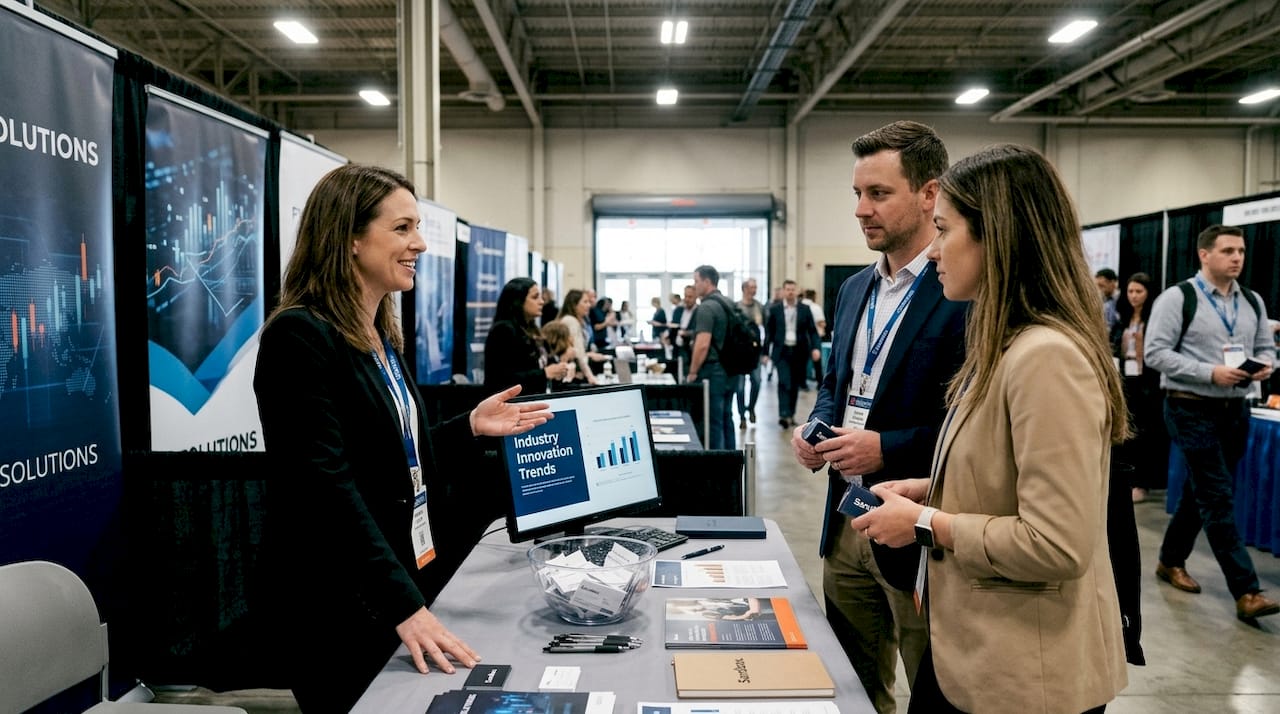
Conferences and trade shows offer broad brand exposure and thought leadership platforms. These large-scale events attract thousands of attendees and provide speaking opportunities, booth presence, and sponsorship visibility. They excel at awareness building but require substantial investment and coordinated follow-up to convert interest into pipeline.
VIP dinners and executive roundtables target high-value prospects for intimate engagement. Limited to 15-25 attendees, these formats facilitate deep conversations with decision makers. They work exceptionally well when your solution requires executive buy-in and your average deal size justifies the per-head cost of premium venues and curated experiences.
Workshops and product launches educate prospects while creating excitement for your solutions. Hands-on formats demonstrate value and build confidence in your capabilities. Product launches generate momentum and media attention, especially when timed with industry events or market shifts.
Webinars and virtual summits extend reach cost-effectively with digital engagement. These formats eliminate travel barriers and enable global participation. While conversion rates typically trail in-person events, virtual formats excel at scaling thought leadership and generating qualified leads from broader audiences.
Hybrid events combine in-person and virtual formats to maximize audience reach and flexibility. Attendees choose their participation mode based on budget, location, and preferences. This approach captures benefits of both formats but demands sophisticated technology and production to deliver quality experiences across channels.
Comparing event campaign types: impact, budget, and ROI considerations
Event campaign selection hinges on understanding the tradeoffs between reach, cost, and conversion potential. In-person events dominate lead generation with 78% of B2B marketers citing them as most impactful, and 83% considering them critical for leads. This effectiveness comes with higher budgets for venue, travel, and staffing compared to digital alternatives.
Hybrid events expand reach by 45% while maintaining in-person engagement benefits. They solve geographic and budget constraints that limit attendance at physical events. However, they require integrated technology for tracking engagement across formats. Without unified data, you end up with fragmented insights that obscure true ROI.
Small intimate events yield 4x pipeline compared to large conferences when your ICP is well-defined. The math is compelling: 20 qualified decision makers in a room generate more revenue opportunity than 2,000 mixed attendees where only 5% match your buyer profile. This concentration effect justifies premium per-attendee costs for high ACV businesses.
| Event Type | Lead Volume | Lead Quality | Budget Level | Pipeline Impact | Best For |
|---|---|---|---|---|---|
| Trade Shows | High | Medium | High | Medium | Brand awareness, market entry |
| VIP Dinners | Low | Very High | Medium | Very High | Enterprise deals, executive access |
| Webinars | Very High | Low-Medium | Low | Low-Medium | Thought leadership, top-funnel |
| Workshops | Medium | High | Medium | High | Product education, mid-funnel |
| Hybrid Events | High | Medium-High | High | Medium-High | Global reach, accessibility |
ROI measurement remains challenging, with 70% of marketers struggling to prove event value. The problem isn't events themselves but broken attribution systems. Integrated data connecting attendance to opportunity creation solves this. Only 20% of marketers follow up leads effectively, which explains why many events feel like poor investments despite strong attendance.
Pro Tip: Calculate cost per qualified lead by event type quarterly. Track not just attendance but pipeline influenced and revenue attributed. This data reveals which formats deserve budget increases and which need optimization or elimination.
High average contract value justifies investment in targeted intimate formats. If your typical deal is under $50,000, large conferences with volume plays make more sense. Above $250,000 ACV, executive dinners and exclusive roundtables deliver better returns because each converted attendee significantly impacts annual revenue.
Choosing the right event campaign for your B2B growth goals
Strategic event selection transforms marketing spend into predictable pipeline generation. Start by matching event format to your business model and growth stage.
-
Assess your ACV and sales cycle. High-value, complex sales benefit from intimate formats that build executive relationships over time. Transactional products with shorter cycles can leverage volume-oriented conferences and webinars. Your average deal size dictates whether you need 20 perfect prospects or 2,000 potential buyers.
-
Audit your ICP definition and segmentation. Well-defined buyer profiles enable targeted event segmentation that concentrates resources on high-probability prospects. Scattered or unclear ICPs make large conferences safer bets for discovery, but expect lower conversion rates and longer payback periods.
-
Evaluate your post-event infrastructure. The best event means nothing without systematic lead follow-up. Map your sales handoff process, CRM integration, and nurture sequences before committing to any campaign. Marketing automation for events turns attendee data into pipeline predictably.
-
Calculate realistic ROI thresholds. Factor in full costs including opportunity cost of team time. Set minimum pipeline creation targets before approving budgets. If an event can't realistically generate 3x its fully loaded cost in pipeline, redirect resources to proven channels.
-
Test and iterate with data. Start with smaller commitments to new event types. Track conversion optimization metrics across the full funnel, not just attendance. Double down on formats that consistently beat your cost per opportunity benchmarks.
Budget increases of 58% are planned across B2B tech marketing, with 59% shifting toward micro-events. This trend reflects growing sophistication in ROI measurement and recognition that targeted engagement outperforms spray-and-pray tactics. AI-powered personalization helps scale intimate event experiences without proportional cost increases.
Prioritize micro-events when your audience is well-segmented and ACV justifies personalized engagement. A series of city-specific dinners for 15-20 decision makers often delivers better results than one national conference. This approach also distributes risk and enables rapid testing of messaging and formats.
Large trade shows fit awareness campaigns but require substantial follow-up resources. Budget not just for booth and travel but for the sales capacity to work leads within 48 hours. Without fast follow-up, post-event engagement drops dramatically and ROI craters.
Avoid events entirely if ICP mismatch is obvious or post-event processes are broken. No event format fixes fundamental go-to-market problems. Strengthen your foundation first, then layer in events as an accelerant.
Boost your event marketing ROI with Sandbox-GTM
Selecting the right event campaigns is just the start. Turning attendance into revenue requires systems that capture intent, prioritize follow-up, and connect event activity to pipeline outcomes. Most marketing teams struggle with fragmented data and manual processes that lose momentum immediately after events end.
Sandbox-GTM transforms events from logistics exercises into accountable growth channels. Our platform captures high-intent signals across meetings, content interactions, and live engagement, then routes qualified prospects to sales with context that accelerates conversations. You'll know exactly who to follow up with, why they matter, and what to do next.
Whether you're running intimate dinners or flagship conferences, Sandbox provides integrated workflows that prove ROI and optimize every program. Stop wondering if events work. Start measuring pipeline influence and revenue attribution with confidence. Explore the Sandbox platform to see how we help B2B teams make events repeatable and worth the investment.
Types of event campaigns: frequently asked questions
What is the most effective B2B event campaign type for lead generation?
In-person events are most effective, with 83% of B2B marketers considering them critical for lead generation. However, effectiveness depends on your ICP and follow-up systems. Small, targeted events like VIP dinners generate 4x more pipeline per attendee than large conferences when your buyer profile is well-defined and average contract value is high.
How can I measure ROI accurately across different event formats?
Integrate event data with your CRM and marketing automation platform to track attendees through the full funnel from registration to closed revenue. Measure pipeline influenced, not just leads collected. Calculate cost per qualified opportunity and revenue attributed to each event type. This requires tagging attendees in your systems and maintaining attribution for 6-12 months post-event.
When should I choose a micro-event over a large trade show?
Choose micro-events when your average contract value exceeds $50,000 and you have a clearly defined ICP. Small formats work best for complex sales requiring executive engagement and peer validation. Select trade shows for brand awareness in new markets, product launches needing broad visibility, or when your ICP is still being refined and you need market feedback.
What role do hybrid events play in expanding audience reach?
Hybrid events boost reach by 45% by eliminating geographic and budget barriers to participation. They work well for thought leadership content and product education that translates effectively to virtual formats. However, they require sophisticated technology for engagement tracking and unified data. Use hybrid formats when your content is strong enough to engage remote audiences and you have infrastructure to deliver quality virtual experiences.
How important is ICP targeting in selecting an event campaign?
ICP targeting is critical for event ROI. Events with poor ICP fit waste budget on unqualified contacts that clog your pipeline and frustrate sales teams. Pre-event targeting ensures attendee quality matches your buyer profile. Post-event, strong ICP definition enables prioritized follow-up on prospects most likely to convert. Without clear ICP, stick to broad awareness events until you refine your target buyer profile.