

TL;DR:
- AI now drives precision targeting, automation, and analytics, transforming event team operations.
- Micro-events with personalized, intent-driven experiences outperform large conferences in conversion.
- Hybrid formats and sustainability are essential, with focus on human connection and authentic values.
Event marketing in 2026 is no longer about filling seats. The pressure is real: budgets are tighter, stakeholders want pipeline proof, and attendees expect relevance from the first touchpoint. The shift from volume to precision is reshaping how the best teams plan, execute, and measure every program. Five trends are pulling ahead of the pack, and understanding them gives you a concrete edge. Whether you're scaling a regional roadshow or rethinking your flagship conference, these trends will help you connect event activity directly to revenue.
Table of Contents
- AI as the foundation for event precision
- Hyper-personalization and micro-events take the lead
- Hybrid, interactive, and regionally tailored formats
- Sustainability, values, and the digital detox movement
- Framework: How to combine trends for maximum impact
- Perspective: Why precision beats scale in event marketing innovation
- Upgrade your event marketing strategy with Sandbox-GTM
- Frequently asked questions
Key Takeaways
| Point | Details |
|---|---|
| AI as an operational layer | AI is now standard in event workflows for targeting, analytics, and personalization. |
| Micro-events outperform in engagement | Curated, intent-driven attendee strategies lead to higher conversions versus traditional large events. |
| Hybrid and interactive formats rise | Hybrid and participatory sessions meet global scale while keeping regional and human connections strong. |
| Sustainability as a must-have | Values, sustainability, and analog experiences are non-negotiable for audience trust and brand impact. |
| Match strategy to goals | The right mix of trends and tactics should be chosen based on your organization's unique objectives. |
AI as the foundation for event precision
AI has graduated from "nice to have" to operational backbone. It now handles targeting, personalization, and analytics at a scale no human team can replicate alone. The impact is already measurable: 95% of organizers expect increased AI use, and 66% say it frees them to focus on high-value strategic work. That's not a small efficiency gain. That's a fundamental change in how event teams operate.
Agentic AI tools now handle repetitive workflow steps automatically, from list segmentation to follow-up sequencing. This lets your team stay focused on creative decisions and relationship-building. Smart event marketing automation means fewer manual handoffs and more consistent execution across every touchpoint.
Here's what AI is doing well for event teams right now:
- 🎯 Precision targeting: Replacing "spray and pray" outreach with intent-based segmentation
- 📊 Predictive analytics: Scoring attendee likelihood to convert before the event even starts
- ✉️ Dynamic personalization: Tailoring content, invitations, and agendas by audience segment
- ⚙️ Workflow automation: Handling scheduling, reminders, and post-event follow-up sequences
| AI use case | Manual approach | AI-powered approach |
|---|---|---|
| Attendee segmentation | Hours of spreadsheet sorting | Instant, behavior-based grouping |
| Follow-up sequencing | Generic post-event emails | Personalized outreach by intent score |
| Content personalization | One-size-fits-all messaging | Dynamic, role-specific content delivery |
Pro Tip: Don't chase every new AI tool. Pick two or three capabilities that solve your biggest friction points, build governance around data accuracy, and let your team learn the workflow before layering on more. Good AI-powered event segmentation starts with clean data, not the fanciest platform.
The teams winning with AI aren't using it for everything. They're using it purposefully, combining automation for event ROI with smart human judgment to drive conversion optimization for events.
With AI setting the operational stage, a major advantage comes from how you target and personalize for specific audiences.
Hyper-personalization and micro-events take the lead
Micro-events are having a major moment. Instead of packing hundreds of semi-interested attendees into a ballroom, high-performing teams are curating smaller, intent-driven gatherings that deliver real signal. The numbers back this up: dynamic registration converts at 24.4% compared to just 11.6% for static pages. That's more than double the conversion, simply by matching the registration experience to attendee intent.
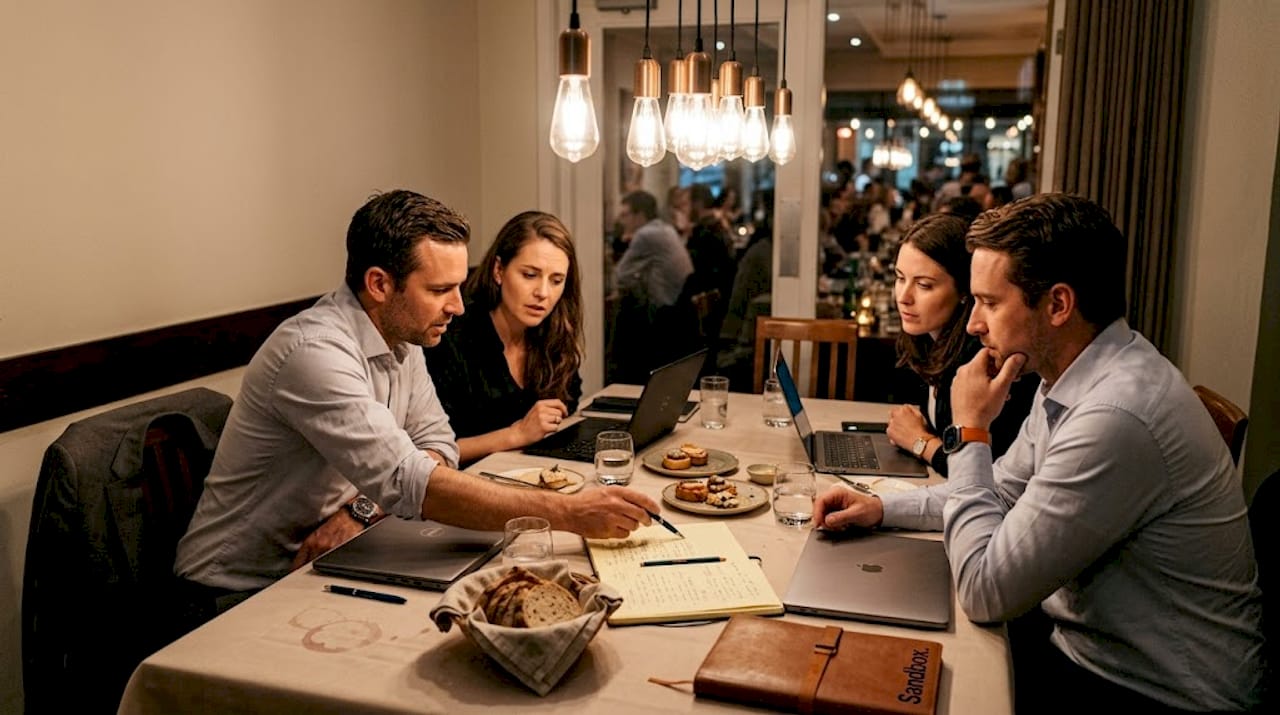
Top-performing organizations are averaging 25 events per year, 412 registrations per event, and a 52% attendance rate. These aren't massive conferences. They're focused, well-curated programs where every attendee was selected with purpose.
Intent capture for events is what makes micro-events work. When you know why someone registered, what content they consumed before the event, and what sessions they engaged with during it, you can build a follow-up sequence that actually resonates. That's personalized event outreach at its most effective.
Here's a quick comparison of micro-events versus large-format conferences:
| Metric | Micro-event | Large conference |
|---|---|---|
| Average attendee count | 50 to 150 | 500+ |
| Personalization depth | High | Low to moderate |
| Conversion rate | 24.4% (dynamic) | 11.6% (static) |
| Follow-up relevance | Strong intent signal | Broad, less targeted |
| Customer acquisition efficiency | High | Variable |
Key benefits teams are seeing with micro-events:
- Stronger pipeline contribution per attendee
- Higher content engagement and session participation
- Easier post-event qualification and handoff to sales
- More meaningful networking and peer connection
Pro Tip: Stop measuring success by headcount. A 60-person dinner with 40 qualified buyers outperforms a 500-person event with 30 real prospects every time. Shift your KPIs toward micro-event strategies that value connection quality over volume.
Beyond personalization and targeting, successful programs in 2026 must balance technical sophistication with human connection, especially in hybrid models.
Hybrid, interactive, and regionally tailored formats
Hybrid isn't a compromise. Done well, it's a force multiplier. You can run one core event and reach multiple regional audiences simultaneously, localizing content without duplicating your entire logistics budget. The hybrid event trends in 2026 show that teams are getting smarter about format selection based on actual audience behavior.
In-person still wins when it matters most. 74% of attendees prefer in-person for product evaluation, and 72% expect event costs to keep rising. That means you need to be strategic about when and why you bring people together physically.
"Interactive sessions consistently outpace passive presentations on engagement metrics. When attendees participate, they remember, they share, and they convert."
Rolling out a regional hybrid event program: here's a numbered approach that works.
- Map your audience geography and identify where in-person clusters already exist.
- Design a core experience that works both in-person and virtually without feeling like a diluted version of either.
- Localize content tracks by region, industry, or role to make every attendee feel the event was built for them.
- Use interactive formats like live polls, breakout discussions, and Q&A sessions to boost participation across both channels.
- Track engagement by format so you can refine the mix based on real measuring event performance data.
The teams seeing the strongest results aren't just streaming their in-person event online. They're designing two distinct but connected experiences that share a core narrative and measurement framework.
As formats multiply and expectations rise, event marketers are also embracing values and well-being as core design principles.
Sustainability, values, and the digital detox movement
Attendees in 2026 expect more than a good agenda. They expect your event to reflect values they care about. Sustainability is now a baseline expectation, not a differentiator, and curated experiences are replacing unstructured serendipity at every level of event design.
The digital detox movement is gaining real traction. Event designers are intentionally building analog moments into their programs: printed materials, phone-free sessions, face-to-face networking without badge scanners in the way. Attendees are fatigued by constant screen engagement, and events that give them permission to disconnect actually earn higher satisfaction scores.
"When you design for human presence rather than content consumption, you create the conditions where relationships actually form."
Curated networking is replacing the old "open cocktail hour" model. Structured introductions, role-based roundtables, and facilitated small-group conversations deliver more meaningful connections than hoping people find each other in a crowded room.
Here's what values-driven event design looks like in practice:
- ♻️ Sustainable sourcing: Local vendors, minimal single-use materials, and carbon-offset travel options
- 🤝 Transparent values: Communicating your event's environmental and social commitments from registration onward
- 📵 Digital detox moments: Phone-free keynotes or device-optional breakout sessions
- 🎯 Curated networking: Pre-matched meetings based on attendee goals and profiles
- 🌱 Low-impact swag: Choosing sustainable branded products that attendees actually keep and use
Pro Tip: Don't save your sustainability story for post-event reports. Make it visible from the first registration email through the final follow-up. When attendees can see your commitment at every stage, it builds trust and strengthens perception. Use tracking sustainable event engagement to measure the impact on attendee satisfaction and retention.
With these foundational shifts clear, event strategists need holistic frameworks to choose, blend, and prioritize trends for their unique goals.
Framework: How to combine trends for maximum impact
Knowing the trends isn't enough. The real skill is knowing which combination fits your audience, your goals, and your operational capacity. Here's how to build your own selection framework.
- Define your primary goal first. Is it pipeline generation, brand awareness, customer retention, or partner activation? Each goal prioritizes different trends.
- Audit your current capabilities. Do you have clean data for AI-powered segmentation? Do you have a team that can execute hybrid production? Start with what you can execute well.
- Match trends to outcomes. Use the table below to align each trend with its primary benefit and watch-out.
- Pilot before you scale. Run one micro-event with dynamic registration before rolling out ten. Test your hybrid format at a regional level before your flagship.
- Measure what moves pipeline. Every trend must connect to a trackable outcome. Trust and data privacy are differentiators now, so make sure your measurement approach respects attendee data.
| Trend | Primary benefit | Key challenge |
|---|---|---|
| AI and automation | Precision targeting, time savings | Data quality and governance |
| Micro-events and personalization | Higher conversion, pipeline quality | Requires intent data infrastructure |
| Hybrid and interactive formats | Scale and regional reach | Production complexity |
| Sustainability and values | Attendee trust and loyalty | Requires authentic commitment |
| Curated networking | Meaningful connections | Facilitation skill and planning |
The smartest event programs in 2026 don't try to implement every trend at once. They pick two or three that align directly with their GTM motion and execute them with discipline.
Having covered the top five trends and a flexible strategy, it's time to discuss an expert perspective on what most event marketers overlook.
Perspective: Why precision beats scale in event marketing innovation
Here's the uncomfortable truth most event marketing conversations skip: more is rarely better. The instinct to run bigger events, adopt every new AI tool, and add another hybrid stream often dilutes what makes events powerful in the first place. Real connection and relevance.
The teams generating disproportionate pipeline from events aren't outspending their peers. They're out-executing them on a narrow set of purposeful choices. They pick one or two AI capabilities, build governance around them, and run them consistently. They design micro-events around buyer intent, not marketing convenience. They make sustainability visible because they actually mean it, not because it looks good in a recap deck.
What moves the needle is operational discipline combined with genuine audience understanding. A curated 80-person dinner with the right buyers and a strong follow-up sequence will outperform a 2,000-person conference with no clear signal capture every time. Measurable customer acquisition comes from knowing who walked in the door, why they came, and what they need next. Sustainability and trust aren't optional extras. They're the foundation your attendees decide whether to return on.
Upgrade your event marketing strategy with Sandbox-GTM
The five trends covered here share one thing in common: they all require better signal capture and smarter execution to deliver real ROI. That's exactly what Sandbox-GTM is built for. 🚀
Sandbox helps event marketing teams implement precision-focused programs that connect every attendee interaction to pipeline and revenue. From event marketing workflows that reduce manual effort to measuring event ROI with CRM integration that ties activity directly to deals, we give you the systems and support to make events accountable. Explore how Sandbox-GTM solutions can help your team turn 2026 event programs into measurable growth engines. Book a strategy session or browse our expert resources to get started.
Frequently asked questions
How is AI changing event marketing in 2026?
AI now serves as the operational core for targeting, personalization, and analytics, with 95% of organizers expecting increased AI use and 66% reporting it frees their teams for higher-value strategic work.
Why focus on micro-events over large conferences?
Micro-events with curated, intent-driven attendees convert at more than twice the rate, with dynamic registration at 24.4% compared to 11.6% for static pages, making them a stronger pipeline investment.
Are hybrid events here to stay in 2026?
Yes. Hybrid formats let you scale programs globally while personalizing locally, and 74% of attendees still prefer in-person for product evaluation and high-stakes touchpoints.
How important is sustainability in event planning today?
Sustainability is a baseline expectation in 2026, with attendees increasingly choosing events that reflect their values. Curated experiences built around transparency and low-impact design are now a competitive requirement, not a bonus.
Recommended
- Why personalize event outreach? Boost engagement and ROI fast
- Unlock key benefits of event marketing automation in 2026
- Event segmentation tips to boost marketing ROI in 2026
- Step-by-step event marketing: a proven framework for B2B ROI
- Maximizing Visibility: Top Strategies for Creating Impactful Branding at Your Next Event - Blucat Group Inc
- AI-Powered Marketing: Beyond the Hype to Real ROI | Rule27 Design