

TL;DR:
- Events create high-intent signals and build trust faster than digital channels alone.
- Proper measurement and follow-up are essential for event-driven acquisition success.
- Hybrid and niche trade shows are the most scalable and effective formats for B2B growth.
Many B2B marketing teams pour budget into paid ads, SEO, and email sequences, then wonder why pipeline growth stalls. The assumption that digital-only campaigns are the most efficient path to new customers is widespread, but the data tells a different story. 67% of B2B event campaigns see suboptimal results, not because events don't work, but because most teams measure them poorly. When you fix the measurement problem, events become one of the most powerful customer acquisition channels available to B2B organizations. This article walks you through the strategies, formats, and follow-up processes that make events genuinely measurable and repeatable.
Table of Contents
- Why events matter in modern B2B customer acquisition
- Event types and their impact: In-person, virtual, and hybrid
- Keys to measurable event-driven acquisition: What works and what fails
- From contacts to customers: Post-event engagement for acquisition
- Why acquisition-focused events succeed where digital alone falls short
- Unlock event-driven growth with Sandbox-GTM
- Frequently asked questions
Key Takeaways
| Point | Details |
|---|---|
| Events outperform digital | Events create unique, trust-building experiences that can drive better B2B customer acquisition than digital-only campaigns. |
| Hybrid scales results | Hybrid events combine reach and engagement, making them highly scalable solutions for acquiring enterprise customers. |
| Measurement is crucial | 67% of event failures are due to poor measurement, so strong KPI tracking and post-event follow-up are essential. |
| Post-event steps matter | Effective segmentation and timely outreach turn event contacts into closed deals more reliably. |
Why events matter in modern B2B customer acquisition
Digital fatigue is real. Decision-makers receive dozens of cold emails and LinkedIn messages every week. Display ads blur into the background. When everything is digital, nothing stands out. Events cut through that noise by creating direct, human engagement that no automated sequence can replicate.
For B2B organizations, the stakes are especially high. Deals are complex, buying committees are large, and trust takes time to build. Events compress that trust-building timeline significantly. A 30-minute conversation at a well-run conference can do more for pipeline than three months of nurture emails.
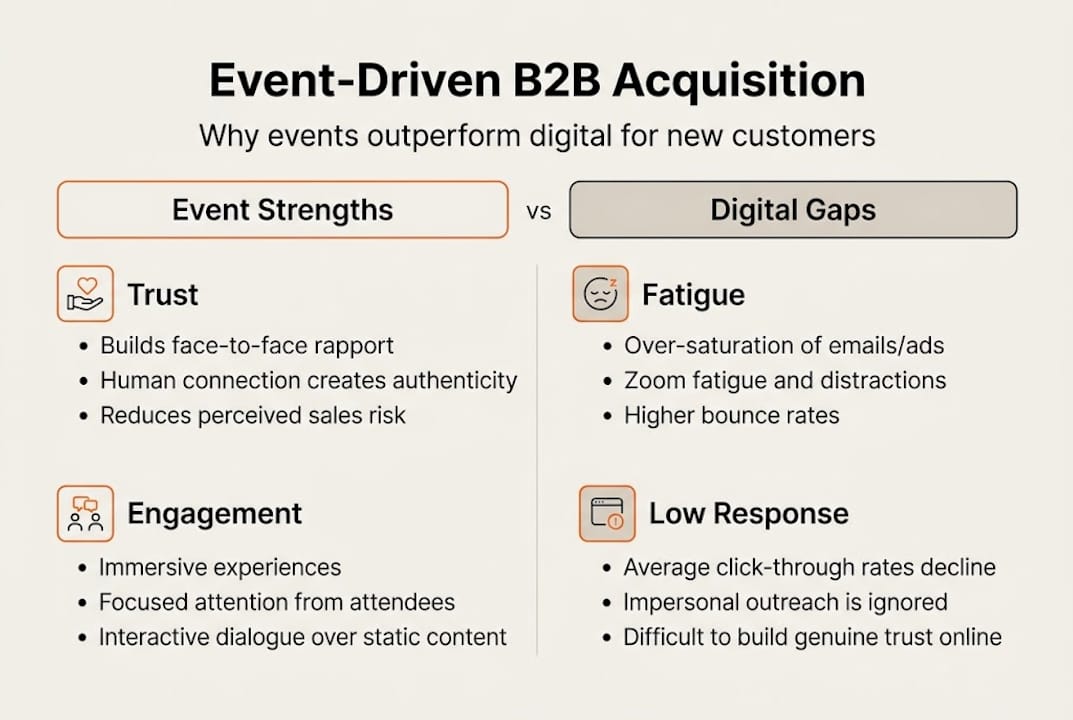
B2B event lead generation works because it creates context. Attendees self-select based on interest, which means the room is already filled with people who care about the problem you solve. That's a targeting advantage you simply can't buy through most digital channels.
Here's why events consistently outperform digital-only approaches in B2B acquisition:
- 🎯 High intent signals: Attendees invest time and often money to be present, signaling genuine interest
- 🤝 Trust acceleration: Face-to-face or live virtual interaction builds credibility faster than content alone
- 📊 Richer data capture: Conversations, session attendance, and booth visits reveal buyer priorities
- 🔄 Multi-stakeholder reach: One event can engage multiple members of a buying committee simultaneously
- 💡 Content amplification: Sessions and keynotes generate reusable assets that extend reach beyond the event itself
Niche trade shows are particularly effective for enterprise acquisition, while hybrid models expand scalability without sacrificing engagement depth. The event marketing automation benefits that come with modern platforms make it easier than ever to capture and act on those signals at scale.
"Hybrid events are reshaping how B2B teams approach acquisition at scale. But without proper measurement frameworks, even the best-attended events fail to move the needle on revenue."
Research consistently shows that webinar lead conversion rates outperform most digital content formats when the follow-up process is structured. The format matters less than the system behind it.
Event types and their impact: In-person, virtual, and hybrid
Choosing the right event format is one of the most consequential decisions you'll make in your acquisition strategy. Each format has distinct strengths, and the wrong choice for your audience can limit results before you even start.
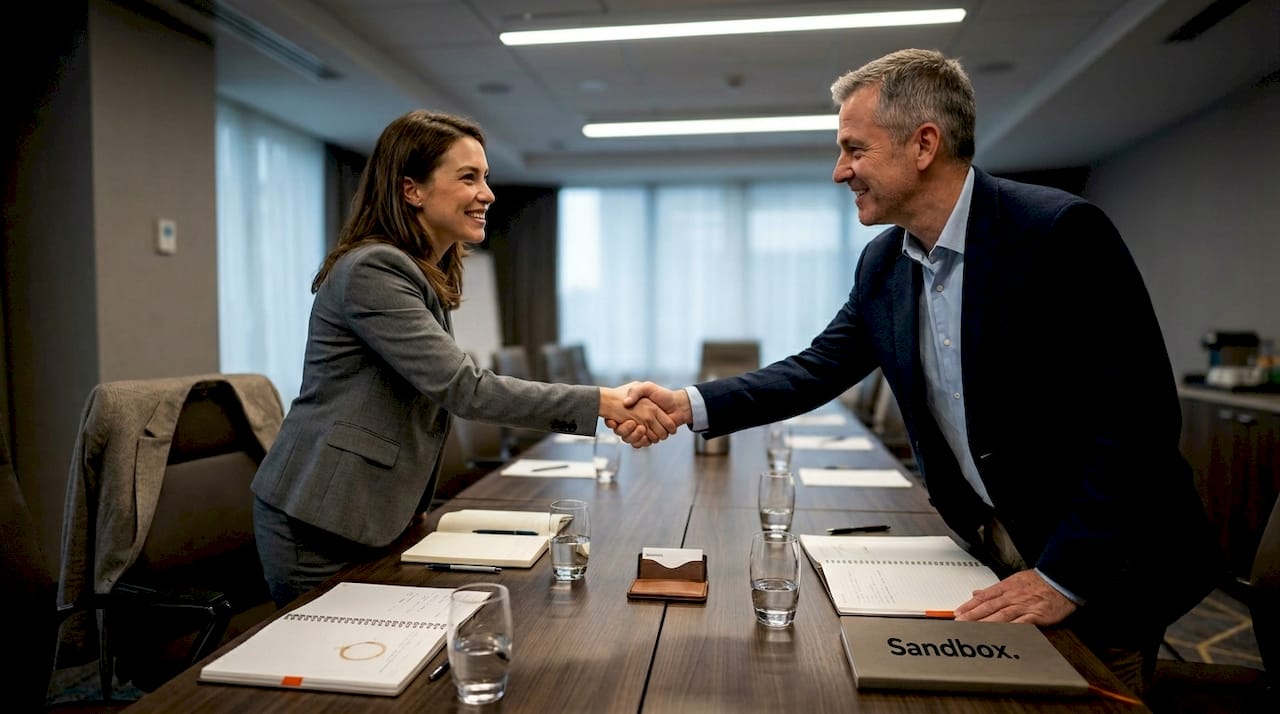
In-person events remain the gold standard for relationship depth. The sensory richness of a live environment, shared meals, hallway conversations, and spontaneous networking create bonds that virtual formats struggle to match. They work best when your audience is geographically concentrated and your deal size justifies the investment.
Virtual events dramatically lower the barrier to attendance. You can reach prospects across time zones without travel costs. Webinar-style formats are especially effective for top-of-funnel acquisition, where volume matters more than depth.
Hybrid events combine both worlds. They're the most scalable format for enterprise B2B acquisition, allowing you to serve a live audience while simultaneously engaging a global virtual one. Hybrid scalability makes them the preferred choice for organizations running flagship programs.
| Format | Key strength | Acquisition tactic | Scalability |
|---|---|---|---|
| In-person | Relationship depth | 1:1 meetings, demos | Moderate |
| Virtual | Wide reach | Webinars, content sessions | High |
| Hybrid | Balance of both | Multi-track engagement | Very high |
Despite these advantages, 67% of events fail to deliver measurable acquisition outcomes due to poor measurement practices. Choosing the right format without a measurement plan is like investing in premium trade show promo products and then forgetting to collect contact information.
Capturing event intent signals is what separates events that generate pipeline from those that generate business cards.
Pro Tip: Match your event format to your buyer's journey stage. Use virtual events for awareness and top-of-funnel reach, in-person for mid-funnel acceleration, and hybrid for programs that need to do both simultaneously.
Keys to measurable event-driven acquisition: What works and what fails
Most event programs fail at the same predictable points. The good news is that these failure modes are entirely preventable when you build measurement into the program from day one, not as an afterthought.
Poor measurement is the root cause behind 67% of B2B event failures. That's not a technology problem. It's a planning problem. Teams invest heavily in logistics and content, then scramble to prove ROI after the fact with incomplete data.
Here are the KPIs that actually connect event activity to acquisition outcomes:
| KPI | What it measures | Impact on acquisition |
|---|---|---|
| Meeting conversion rate | % of attendees who booked meetings | Direct pipeline signal |
| Session engagement score | Depth of content interaction | Buyer intent indicator |
| Post-event response rate | % who engaged with follow-up | Acquisition funnel velocity |
| Contact-to-opportunity rate | Leads converted to open deals | Revenue attribution |
The core tactics that drive measurable acquisition include intent signal capture, audience segmentation, and personalized follow-up workflows. Event marketing automation connects these tactics into a repeatable system. Without automation, follow-up becomes inconsistent and opportunities fall through the cracks.
Top mistakes that kill event acquisition results:
- ❌ No pre-defined KPIs: You can't measure what you haven't defined before the event
- ❌ Generic follow-up: Sending the same email to every contact ignores intent signals
- ❌ Delayed outreach: Waiting more than 48 hours after an event dramatically reduces response rates
- ❌ Siloed data: Event data that doesn't connect to your CRM creates blind spots in attribution
- ❌ No sales alignment: Marketing collects leads while sales doesn't know what happened at the event
A solid event marketing ROI framework gives your team a shared language for success. Pair it with clear event marketing metrics and you'll know exactly which events deserve reinvestment. Quality event print materials and on-site assets matter, but they're secondary to having a measurement system that works.
From contacts to customers: Post-event engagement for acquisition
The event ends. Most of your competitors send one generic follow-up email and call it done. That's exactly why 67% of event campaigns fail to convert contacts into customers. Post-event engagement is where acquisition actually happens, and it's where most B2B teams leave the most value on the table.
Here's a five-step process that moves contacts from event floor to closed deal:
- Qualify and score within 24 hours. Use intent signals from the event (sessions attended, meetings held, content downloaded) to prioritize your follow-up list. Not every contact deserves the same attention.
- Segment by buyer stage and interest. Group contacts based on what they engaged with. A prospect who attended your product demo session needs a different message than someone who attended a thought leadership panel.
- Send personalized outreach within 48 hours. Reference something specific from the event. Personalized event outreach consistently outperforms generic follow-up in response rates and meeting conversion.
- Hand off to sales with full context. Share the intent data, not just the contact details. Sales reps who know what a prospect engaged with can have smarter first conversations.
- Nurture non-ready contacts with relevant content. Not everyone is ready to buy immediately. A structured post-event engagement process keeps warm contacts moving toward a decision.
Where B2B organizations most commonly stall is at step four. Marketing captures great data but fails to transfer it meaningfully to sales. The handoff becomes a spreadsheet dump instead of a strategic briefing. Event segmentation tips help you build the structure that makes handoffs clean and actionable.
Pro Tip: Create a post-event Slack channel or shared CRM view where marketing and sales can see the same intent data in real time. This eliminates the "we didn't know" problem and accelerates follow-up speed significantly.
Following event follow-up best practices isn't just about speed. It's about relevance. The teams that win post-event are the ones who treat every contact as an individual with specific interests, not a name on a list. Building marketing communities around your event content extends the conversation well beyond the event itself.
Why acquisition-focused events succeed where digital alone falls short
Here's an uncomfortable truth: digital-only acquisition campaigns are experiencing diminishing returns in most B2B markets. Inboxes are saturated. Ad costs keep rising. Content competition is fierce. The channels that worked three years ago are delivering less for more investment.
Events don't suffer from the same saturation problem. When you show up in person or run a genuinely valuable virtual program, you occupy a different category in your buyer's mind. You're not an ad. You're an experience.
What we've seen consistently is that B2B lead generation strategies that integrate events with digital follow-up outperform either channel alone. Events generate the trust and intent signals. Digital channels scale the nurture and conversion process. Together, they create an acquisition engine that compounds over time.
"The real power of events isn't the keynote or the booth. It's the conversation that happens because both people chose to be in the same room."
Organizations that treat events as a standalone tactic miss this entirely. The ones that connect event activity to AI-driven client acquisition workflows and broader GTM strategy are the ones building durable pipeline. Events aren't a replacement for digital. They're the catalyst that makes everything else work better.
Unlock event-driven growth with Sandbox-GTM
If you're ready to stop guessing which events drive pipeline and start knowing, Sandbox is built for exactly that. We help B2B marketing teams turn high-intent event moments into measurable GTM signal, connecting every meeting, session, and interaction to real acquisition outcomes.
Our platform combines opinionated event marketing workflow optimization with hands-on execution support, so your team has both the system and the signal to act fast and act smart. Whether you're scaling a flagship conference or running your first targeted program, Sandbox-GTM gives you the tools to make every event accountable and worth repeating. Explore what's possible when events become a first-class growth channel. 🚀
Frequently asked questions
What types of events are most effective for B2B customer acquisition?
Hybrid events and niche trade shows are most effective, as they balance reach, engagement, and scalability for B2B customer acquisition. Hybrid formats work especially well for enterprise programs that need to serve both local and global audiences simultaneously.
Why do so many B2B event campaigns fail to deliver new customers?
Most B2B event failures occur because 67% are poorly measured, lacking clear KPIs and post-event follow-up strategies. Without defined success metrics before the event, teams can't connect activity to acquisition outcomes.
How can I measure the real ROI of customer acquisition from events?
Track pre-defined KPIs like meeting conversion rates, session engagement scores, and post-event contact-to-opportunity rates using integrated tools. Connecting event measurement data directly to your CRM is the most reliable way to quantify acquisition ROI.
What role do hybrid events play in scaling acquisition for enterprise B2B?
Hybrid events offer scalability by expanding reach and allowing deeper engagement across both live and virtual audiences, making them ideal for enterprise-level B2B customer acquisition programs.
Recommended
- Events in lead generation: B2B success strategies 2026
- Step-by-step event marketing: a proven framework for B2B ROI
- Why track event engagement: boost B2B growth in 2026
- Event intent capture guide for B2B marketers in 2026
- Role of Social Media in B2B Client Acquisition - Jarrod Harman
- Effective Strategies for B2B Marketing Success | Idea Stream