

Most event marketers collect leads but struggle to convert them. Only about 18% of event leads receive serious follow-up, leaving vast revenue untapped. Event opportunity tracking changes this by prioritizing leads based on real engagement signals, not badge scans alone. This guide covers what tracking is, why it matters, and how to implement it. You'll learn to turn event data into pipeline growth and measurable ROI.
Table of Contents
- Understanding Event Opportunity Tracking
- Why Event Opportunity Tracking Matters
- Common Misconceptions About Event Opportunity Tracking
- How Event Opportunity Tracking Works: Mechanisms and Technologies
- Implementing Event Opportunity Tracking: A Step-by-Step Framework
- Leveraging Tracking Data for Lead Generation and Pipeline Acceleration
- Conclusion: From Opportunity Tracking to Measurable Event ROI
- Discover Our Event Opportunity Tracking Solutions
- Frequently Asked Questions
Key Takeaways
| Point | Details |
|---|---|
| Only 18% of leads get followed up | Traditional methods miss 82% of potential revenue opportunities |
| Quality beats volume | Pipeline impact and relationship depth matter more than raw lead counts |
| Timing is critical | Following up within 24-48 hours converts 60% more leads |
| Multi-signal tracking wins | Meetings, content interaction, and booth visits reveal true buyer intent |
| 4:1 pipeline ROI achievable | Event opportunity tracking enables benchmark 4:1 pipeline-to-cost ratios |
Understanding Event Opportunity Tracking
Event opportunity tracking captures real-time buyer intent signals that go far beyond badge scans. It monitors multiple touchpoints: scheduled meetings, content downloads, booth dwell time, and session attendance. This creates a complete picture of attendee engagement and buying interest.
Traditional lead capture logs names and contact details. Opportunity tracking identifies who's actively researching solutions and ready for sales conversations. It's a strategic revenue system, not a contact collection exercise.
78% of B2B event organizers rate in-person events as their most impactful marketing channel when opportunity tracking is incorporated. The difference lies in capturing depth, not just volume.
Key event signals used in tracking include:
- Meeting duration and attendee seniority level
- Content pieces downloaded and time spent engaging
- Booth visit frequency and conversation topics
- Session attendance patterns and Q&A participation
- Demo requests and product interest indicators
Integrating data across these touchpoints reveals patterns. An attendee who schedules a meeting, downloads three whitepapers, and attends your keynote shows stronger intent than someone who just scanned a badge. The combination of signals matters more than any single action.
"Modern event marketing requires capturing both physical interactions and digital engagement signals. Hybrid events and AI personalization have fundamentally changed how we track buyer intent across event experiences."
Your tracking system should connect these dots automatically. Manual spreadsheets can't keep pace with real-time event data flowing from multiple sources simultaneously.
Why Event Opportunity Tracking Matters
The measurement focus has shifted from lead volume to pipeline quality and relationship depth. Executives want to see how events drive revenue, not just how many business cards you collected.
Tighter budgets intensify this pressure. 69% report flat or decreased event budgets, forcing teams to prove measurable ROI for every dollar spent. Opportunity tracking answers this challenge by linking attendee actions directly to sales pipeline.
70% of B2B organizations now report event-led marketing pipeline as their primary metric. This represents a fundamental shift. Teams must demonstrate how events influence deals, accelerate pipeline velocity, and contribute to closed revenue.
Opportunity tracking enables this proof through:
- Attribution linking specific attendee interactions to pipeline opportunities
- Engagement scoring that prioritizes high-intent prospects for sales
- Multi-touch journey mapping showing event influence on deal progression
- ROI calculation connecting event spend to generated pipeline value
Pro Tip: Focus your tracking efforts on high-value target accounts rather than trying to capture every attendee interaction. Prioritizing 20% of attendees who match your ideal customer profile typically generates 80% of your event pipeline.
"The shift to pipeline-based metrics reflects broader changes in how B2B buyers research and purchase. Events serve as critical touchpoints in longer, more complex buying journeys. Event opportunity tracking solutions help teams understand where each prospect sits in that journey."
Without opportunity tracking, you're flying blind. You might know 500 people attended your booth, but you can't identify which 50 are actively evaluating solutions and ready for sales outreach.
Common Misconceptions About Event Opportunity Tracking
Several myths persist about event tracking that limit its adoption and effectiveness. Understanding what tracking doesn't do helps set realistic expectations.
-
Badge scans capture full attendee interest: Badge scanning logs contact information but misses engagement depth. 73% mistakenly over-rely on badge scans, missing critical signals like meeting quality, content interaction, and conversation topics. A badge scan tells you someone visited your booth, not whether they're a qualified buyer.
-
Lead volume alone drives ROI: Collecting 1,000 leads sounds impressive but means nothing if only 2% are qualified. Quality and pipeline impact matter more. Five high-intent prospects who become opportunities generate more value than 100 unqualified contacts who never respond to follow-up.
-
Manual data capture suffices: Spreadsheets and note-taking can't track multi-channel engagement in real time. Integrated digital platforms are essential for capturing signals across meetings, content, booth visits, and sessions simultaneously. Manual methods create delays that cost you the critical 24-48 hour follow-up window.
These misconceptions lead to lost pipeline and inefficient follow-up. Teams waste time contacting low-intent attendees while high-value prospects go cold. Opportunity tracking fixes this by automatically identifying and prioritizing your best opportunities.
"The gap between perception and reality in event measurement stems from outdated practices. Modern buyers interact with your brand across multiple channels before, during, and after events. Capturing only one touchpoint gives you an incomplete, often misleading picture of true buying interest."
Recognizing these myths helps you avoid common pitfalls and build tracking systems that actually drive pipeline growth.
How Event Opportunity Tracking Works: Mechanisms and Technologies
Opportunity tracking combines several data capture methods to build complete engagement profiles. Badge scanning provides basic attendee identification. Meeting scheduling platforms log conversations with specific prospects. Content management systems track downloads and time spent with materials. Session attendance tools monitor which presentations attendees prioritize.
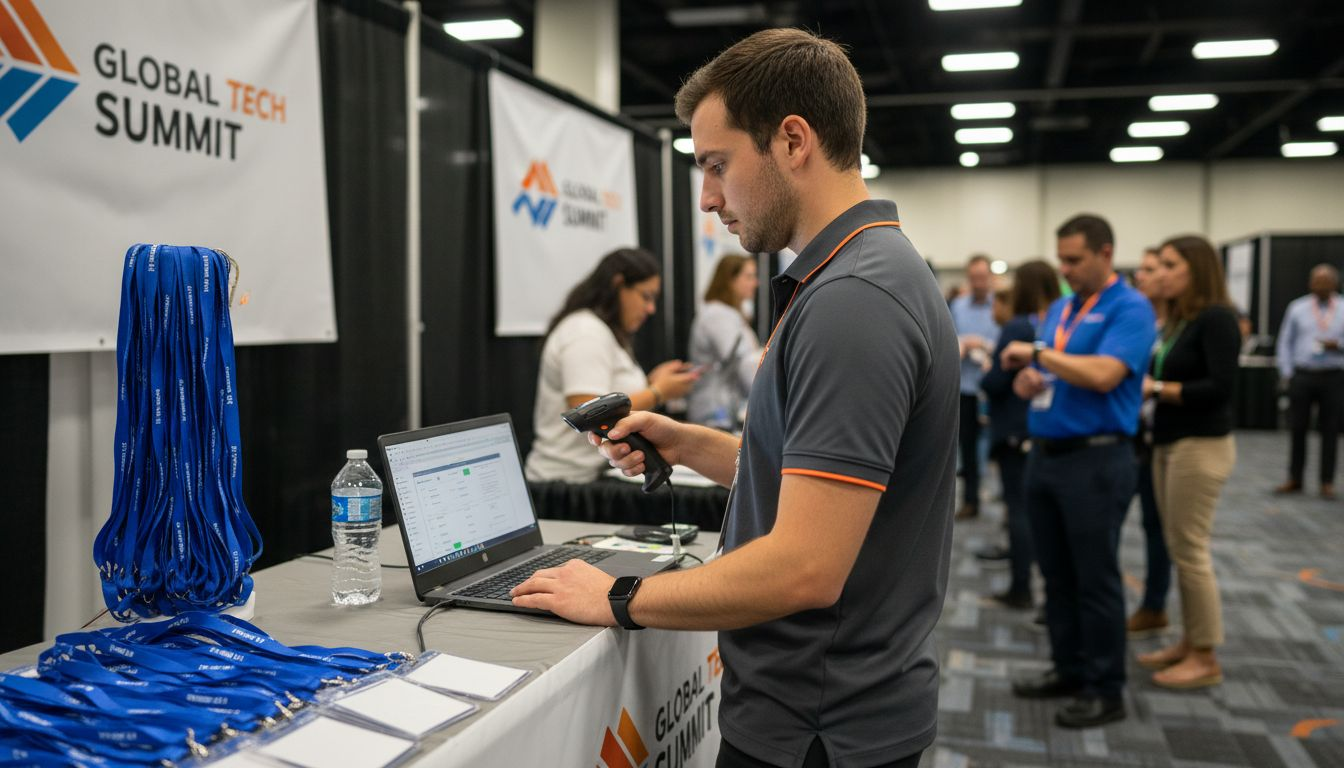
AI analyzes these signals to identify patterns and score engagement levels. Hybrid events require both physical and digital signal capture, with AI personalization boosting tracking effectiveness by tailoring content recommendations based on attendee behavior.
CRM integration enables attribution and pipeline management. Platforms connect tracking data directly into CRM, creating a seamless flow from event interaction to sales opportunity. This integration allows you to see exactly which event activities influenced each deal.
| Feature | Traditional Lead Capture | Event Opportunity Tracking |
|---|---|---|
| Data collected | Name, email, company | Multi-signal engagement profile |
| Timing | Post-event batch upload | Real-time integration |
| Prioritization | Manual or none | AI-driven scoring |
| CRM integration | Manual import | Automatic sync |
| Attribution | Not tracked | Multi-touch mapping |
| Follow-up guidance | Generic | Personalized based on signals |
Key technology components include:
- Event apps with built-in tracking capabilities
- Meeting scheduling and management platforms
- Content engagement monitoring tools
- AI-powered scoring and recommendation engines
- CRM and marketing automation integrations
These systems work together to create a comprehensive technical infrastructure for event tracking. The goal is capturing rich behavioral data that reveals true buying intent.
Pro Tip: Leverage AI-driven personalization to deepen engagement during events. When your system recommends relevant content based on attendee interests, it creates more touchpoints to track while simultaneously providing better attendee experiences. This dual benefit maximizes both engagement quality and tracking accuracy.
Implementing Event Opportunity Tracking: A Step-by-Step Framework
Adopting opportunity tracking requires structured workflows that span pre-event planning through post-event sales execution. Here's how mid-sized B2B teams can implement tracking effectively.
-
Pre-event account targeting and qualification: Identify target accounts and key stakeholders before the event. Build lists of must-meet prospects and research their current challenges. This preparation ensures you track the right people and personalize engagement.
-
Real-time multi-signal intent capture during event: Deploy integrated tools that automatically log meetings, content interactions, booth visits, and session attendance. Structured workflows include pre-event targeting, real-time intent capture, and coordinated team execution. Train booth staff to log conversation details and tag high-priority prospects immediately.
-
Post-event lead scoring and prioritization: Use AI scoring to rank prospects based on engagement signal strength. Separate hot leads who need immediate outreach from warm prospects requiring nurture sequences. This prioritization focuses sales efforts where they'll generate the highest return.
-
Execute structured 2-3 week multi-channel sales follow-up: A 2-3 week prioritized sales follow-up maximizes conversion rates. Coordinate email, phone, and social outreach based on tracked signals. Reference specific conversations and content interactions to demonstrate relevance.
-
Continuous feedback and optimization: Hold post-event debriefs with sales teams to review what worked. Analyze which signals best predicted pipeline conversion. Cross-team alignment among marketing, SDRs, and sales is key to improving future event performance.
Pro Tip: Establish clear SLAs between marketing and sales before events. Define response time commitments for different lead tiers. Hold joint planning sessions to align on target accounts and success metrics. This alignment prevents the common breakdown where marketing generates great leads but sales doesn't follow up effectively.
Following a step-by-step event tracking workflow ensures consistent execution across multiple events and continuous improvement of your tracking approach.
Leveraging Tracking Data for Lead Generation and Pipeline Acceleration
Tracked event data transforms how you prioritize prospects and accelerate pipeline velocity. Instead of treating all leads equally, you focus sales resources on attendees showing the strongest buying signals.
Prioritization based on engagement signal strength means calling the prospect who attended three sessions and scheduled a meeting before contacting someone who only stopped by your booth briefly. This focus improves conversion rates while reducing wasted sales effort.
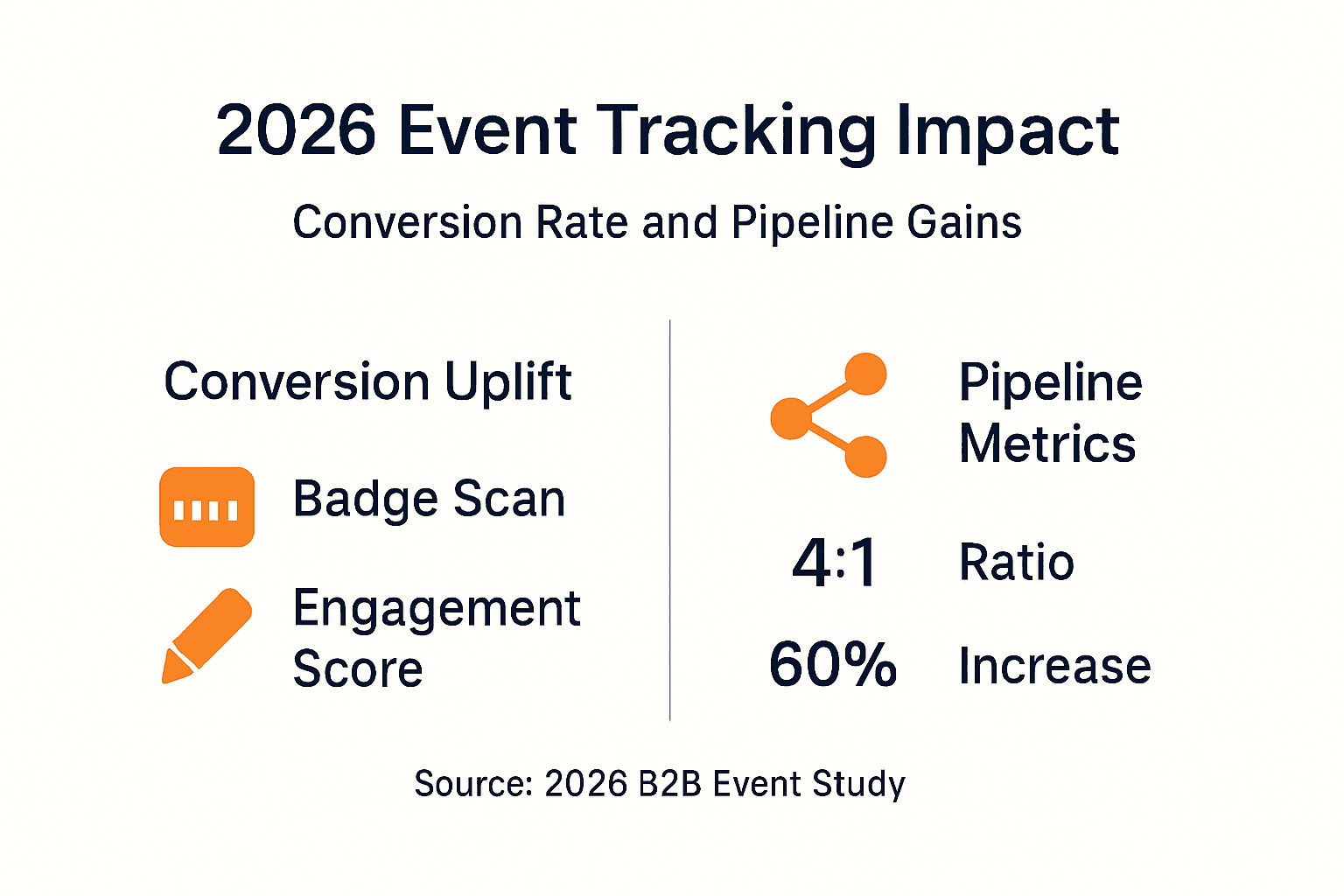
Timing matters critically. Trade show leads followed up within 24-48 hours convert 60% more with opportunity tracking. Real-time data enables this speed by identifying hot prospects while the event is fresh in their minds.
The business impact shows clearly in pipeline metrics. Event opportunity tracking enables a 4:1 pipeline-to-cost ratio benchmark. This means every dollar spent on events generates four dollars in sales pipeline value.
| Follow-up Timing | Conversion Rate without Tracking | Conversion Rate with Tracking |
|---|---|---|
| Within 24 hours | 22% | 35% |
| 24-48 hours | 18% | 29% |
| 3-5 days | 12% | 19% |
| 1-2 weeks | 8% | 13% |
| 2+ weeks | 4% | 7% |
Lead generation tactics enhanced by tracking data include:
- Personalized outreach referencing specific event interactions
- Account prioritization based on multi-stakeholder engagement
- Tailored content recommendations aligned with tracked interests
- Strategic timing of follow-up calls and emails
- Coordinated multi-channel sequences across email, phone, and social
These tactics work because you're operating from knowledge, not guesswork. You know exactly what each prospect cares about based on their event behavior.
Pro Tip: Use multi-channel follow-up sequences to maintain prospect engagement post-event. Start with a personalized email within 24 hours referencing specific conversations. Follow up with a phone call 2-3 days later. Add LinkedIn connection requests and relevant content shares throughout the first two weeks. This coordinated approach keeps you visible while demonstrating value.
Conclusion: From Opportunity Tracking to Measurable Event ROI
Event opportunity tracking transforms how B2B marketers demonstrate value and drive revenue growth. By capturing real-time buyer intent signals across multiple touchpoints, you link attendee engagement directly to pipeline outcomes.
Prioritized follow-up based on engagement strength drives the conversion rates that justify event investment. When you can prove events generate measurable pipeline at a 4:1 ratio, budget conversations shift from defending costs to scaling success.
Adopting opportunity tracking gives mid-sized B2B teams a competitive advantage. While competitors waste resources on unqualified leads, you focus on high-intent prospects ready for sales conversations. This efficiency compounds over time as you refine targeting and improve conversion rates.
Event marketing accountability comes from data-driven decisions. Track what matters, measure what drives pipeline, and optimize continuously. The organizations winning with events in 2026 treat tracking as essential infrastructure, not optional add-on.
Discover Our Event Opportunity Tracking Solutions
Ready to turn event moments into measurable pipeline? Sandbox helps B2B teams capture high-intent signals and convert them into revenue outcomes. Our platform combines real-time tracking with opinionated GTM workflows that connect event activity directly to sales results.

We treat events as a first-class growth channel, not a logistics exercise. You'll understand who to follow up with, why they matter, and what to do next through integrated signal capture across meetings, content, and live interactions.
Whether you're running your first program or scaling a flagship conference, our event opportunity tracking solutions provide the systems, signal, and support to make events accountable and worth repeating. Explore how we help mid-sized B2B marketers drive pipeline and prove ROI.
Frequently Asked Questions
What distinguishes event opportunity tracking from traditional lead capture?
Traditional lead capture logs contact information through badge scans. Event opportunity tracking captures multi-signal engagement data including meetings, content interaction, booth visits, and session attendance. This reveals buying intent depth, not just identity. The difference is knowing who's actively evaluating solutions versus who briefly visited your booth.
How soon should sales teams follow up on tracked opportunities?
Follow up within 24-48 hours for maximum impact. Leads contacted in this window convert 60% more than those reached later. Real-time tracking enables this speed by immediately identifying high-priority prospects. Your CRM should flag hot leads automatically so sales can act while the event is fresh in prospect minds.
What technologies are essential for implementing effective event tracking?
You need integrated systems covering badge scanning, meeting scheduling, content management, and CRM sync. AI-powered scoring engines prioritize prospects based on engagement signals. Hybrid event platforms capture both physical and digital interactions. The key is seamless integration so data flows automatically without manual entry or spreadsheet management.
How can mid-sized companies align sales and marketing around event tracking?
Establish clear SLAs defining response times for different lead tiers before events. Hold joint planning sessions to align on target accounts and success metrics. Create shared dashboards showing real-time tracking data both teams can access. Post-event debriefs should review conversion rates and refine scoring models based on which signals actually predicted pipeline.
What metrics best measure event opportunity tracking success?
Focus on pipeline-to-cost ratio, aiming for 4:1 benchmark. Track follow-up conversion rates by timing window and lead tier. Measure deal velocity for event-sourced opportunities versus other channels. Monitor percentage of tracked leads that become qualified opportunities. These metrics prove ROI and justify continued event investment to executives.