
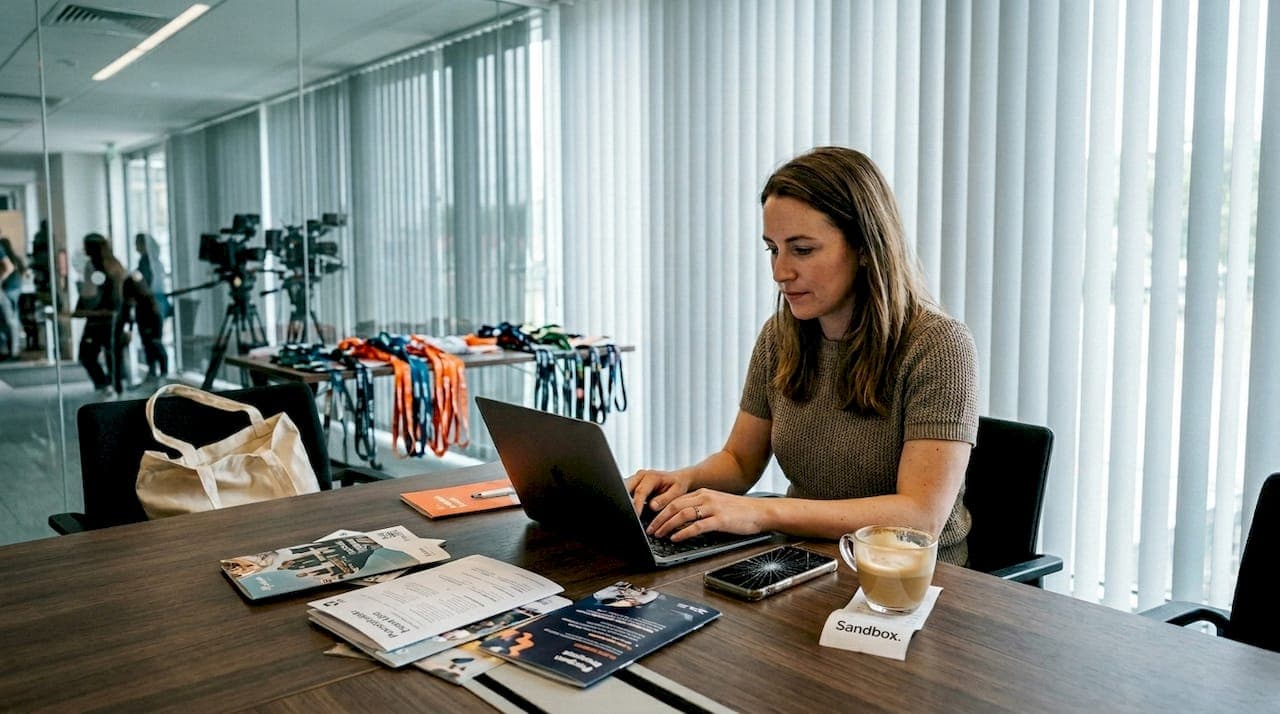
80% of event leads receive zero follow-up after the event ends. That's a staggering amount of pipeline left on the table, especially when you consider that event-driven leads convert two to three times more than cold outreach. If your team is investing in conferences, webinars, or trade shows, the real ROI lives in what happens after the last session wraps. This guide walks you through the mechanics, workflows, benchmarks, and actionable steps to turn your event contacts into sales-ready opportunities that actually move the needle.
Table of Contents
- Defining event lead nurturing: more than just follow-up
- The mechanics of event lead nurturing workflows
- Segmentation and scoring: turning event data into actionable tiers
- Benchmarks & results: ROI from structured event lead nurturing
- Manual versus automated nurturing: scaling with technology
- Actionable steps for launching an event lead nurturing program
- Transform your event outcomes with Sandbox-GTM solutions
- Frequently asked questions
Key Takeaways
| Point | Details |
|---|---|
| Speed wins conversions | Following up with event leads within 24-48 hours can boost conversions by up to 60 percent. |
| Segmentation drives value | Dividing event leads by engagement and adjusting scoring ensures your sales team focuses on high-potential prospects. |
| Automation maximizes ROI | Automated, personalized workflows yield more sales-ready leads at lower cost and faster sales cycles. |
| Data capture is key | Successful lead nurturing depends on capturing rich event data like booth visits, demo requests, and session attendance. |
Defining event lead nurturing: more than just follow-up
Let's clear something up right away. Sending a single "great to meet you" email is not lead nurturing. Event lead nurturing is the process of engaging and qualifying leads captured from events through targeted, automated follow-up sequences designed to convert them into sales opportunities. It applies to every event format: in-person conferences, virtual summits, and webinars alike.
What makes event leads special is intent. These people showed up, raised their hands, and engaged with your brand in real time. That's a fundamentally different starting point than a cold contact who downloaded a PDF at 2 a.m. Nurturing that intent with personalized, relevant outreach is how you protect and grow the investment your team made to be at that event.
"Event leads are not just contacts. They are signals. The way you respond to those signals determines whether your event budget becomes pipeline or a sunk cost."
Here's what effective event lead nurturing includes:
- 🎯 Segmentation by engagement level (hot, warm, cold)
- 📧 Automated multi-channel sequences across email, LinkedIn, and SMS
- 🗂️ CRM integration to track every touchpoint
- 🤝 Sales handoff protocols for high-intent leads
- 📊 Lead scoring adjustments based on event behavior
Explore B2B event lead generation strategies to see how top teams structure their programs from the ground up.
Pro Tip: Start nurturing before the event ends. A quick personalized message sent during the event itself can dramatically increase response rates compared to waiting until the following week.
The mechanics of event lead nurturing workflows
A strong nurturing workflow has three distinct phases: pre-event, real-time, and post-event. Each phase plays a specific role in moving leads through your funnel.
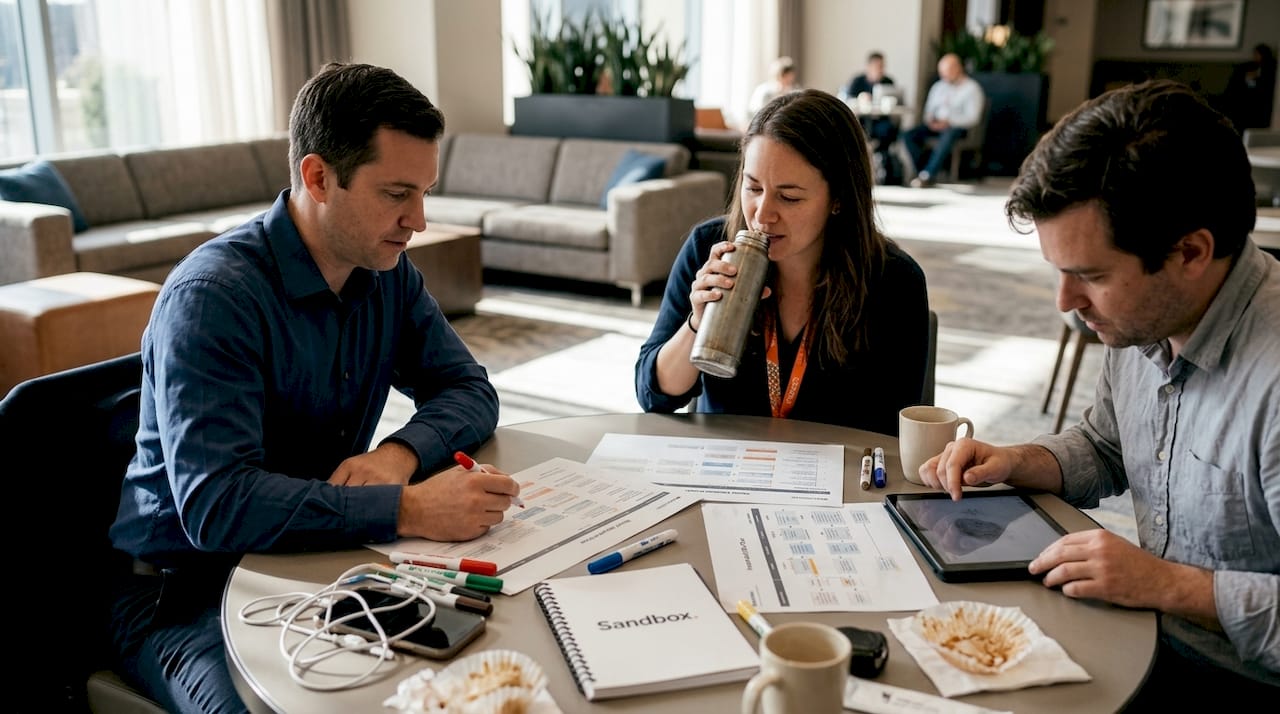
The core mechanics involve immediate post-event segmentation into hot, warm, and cold tiers based on engagement signals like booth time, demo requests, and sessions attended. From there, multi-channel automated sequences deliver personalized content that references specific event interactions.
Here's a structured breakdown of the workflow stages:
- Pre-event nurturing: Send topic-related content to registered attendees to build familiarity and set expectations.
- Real-time data capture: Use badge scans, QR codes, and digital forms integrated directly into your CRM to log every interaction as it happens.
- First touch within 24-48 hours: Trigger a personalized email or video message referencing the specific conversation or session the lead attended.
- 5 to 6 touch nurture drip: Deliver a sequenced series of relevant content pieces, case studies, and offers over the following two to three weeks.
- Lead scoring adjustment: Increase scores for leads who open emails, click links, or request demos during the nurture sequence.
- Sales handoff: Pass high-engagement leads to your sales team with full context from the event and nurture activity.
The key methodologies confirm that a 24 to 48 hour first touch combined with a structured drip sequence is the standard for top-performing event programs.
| Workflow stage | Primary channel | Goal |
|---|---|---|
| Pre-event | Email, social | Build awareness and intent |
| Real-time capture | Badge scan, QR, forms | Log engagement data in CRM |
| First touch (24-48h) | Email, video | Personalized re-engagement |
| Nurture drip (5-6 touches) | Email, LinkedIn, SMS | Educate and qualify |
| Sales handoff | CRM alert, direct call | Convert high-intent leads |
Pro Tip: Use segmentation tips for event leads to build your tier logic before the event. Deciding in advance what makes a lead "hot" saves hours of manual sorting afterward.
For a deeper look at maximizing what happens after the event, check out post-event engagement optimization.
Segmentation and scoring: turning event data into actionable tiers
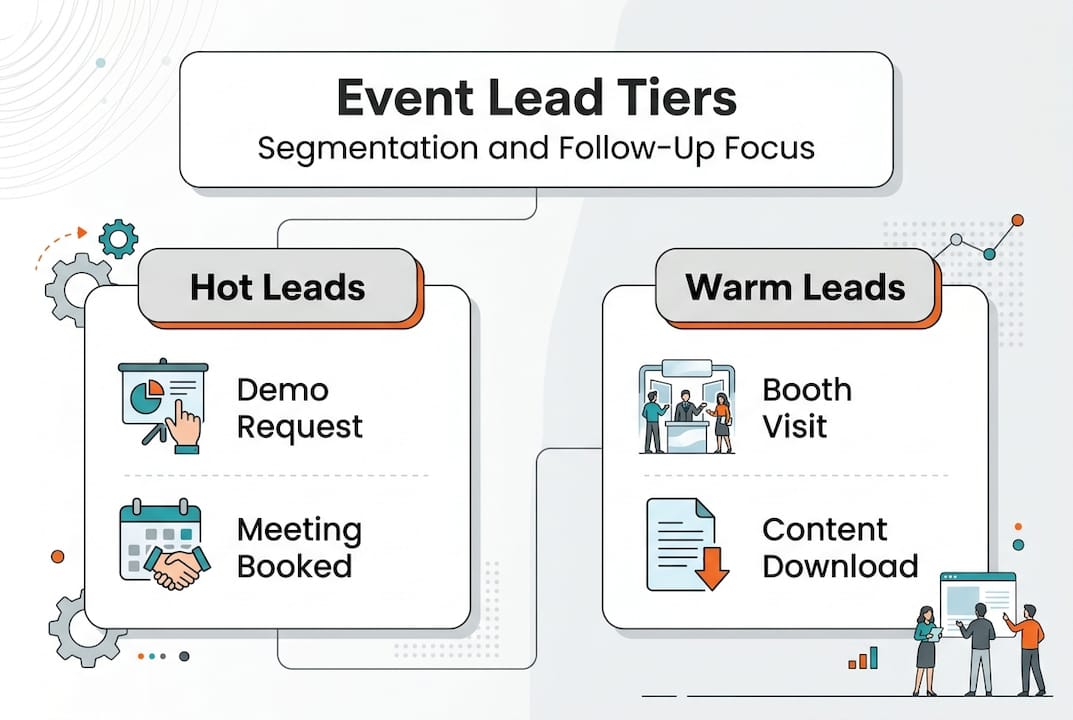
Not every lead deserves the same follow-up. That's the core insight behind event lead segmentation. The goal is to use the engagement signals you captured during the event to assign each contact to a tier, then tailor your outreach accordingly.
Here's how the three tiers typically break down:
- 🔥 Hot leads: Attended a demo, requested a follow-up meeting, or spent significant time at your booth. These get immediate, personalized outreach from a sales rep.
- 🌡️ Warm leads: Attended a session, visited your booth briefly, or engaged with your content. These enter an automated nurture sequence with moderate personalization.
- ❄️ Cold leads: Scanned a badge or collected a brochure with minimal interaction. These receive a lighter-touch educational sequence.
Event leads are scored higher by default because they've already demonstrated intent. Companies excelling at lead nurturing generate 50% more sales-ready leads at 33% lower cost, and following up within 24 hours boosts conversions by 60%.
| Lead tier | Engagement signal | Follow-up speed | Outreach type |
|---|---|---|---|
| Hot | Demo request, meeting booked | Within 24 hours | Personal sales rep call |
| Warm | Session attended, booth visit | Within 48 hours | Automated personalized email |
| Cold | Badge scan, brochure pickup | Within 72 hours | Educational drip sequence |
Use event conversion optimization frameworks to refine your scoring model over time. The more events you run, the sharper your tier logic becomes. You can also explore segmentation methods to build a repeatable system that scales.
Benchmarks & results: ROI from structured event lead nurturing
Numbers tell the story here. When you build a disciplined event lead nurturing program, the results are measurable and significant.
📊 Key benchmarks to know:
| Metric | Benchmark |
|---|---|
| More sales-ready leads | 50% increase with structured nurturing |
| Cost reduction | 33% lower cost per sales-ready lead |
| Conversion rate vs. cold leads | 2 to 3 times higher |
| Conversion boost from 24h follow-up | 60% improvement |
| Order value for nurtured leads | 47% higher than non-nurtured |
| Sales cycle speed | 23% faster for nurtured leads |
These event lead nurturing benchmarks are not aspirational targets. They reflect what organizations with structured programs consistently achieve.
"Nurtured leads don't just convert more often. They spend more and close faster. That's the compounding effect of treating event engagement as a signal rather than a transaction."
The speed factor is especially important. Your prospects are talking to five or more vendors at the same event. The team that follows up first with the most relevant message wins the conversation. Explore event marketing automation ROI to understand how automation makes that speed possible at scale. You can also review event automation benefits and the importance of event metrics to build a full picture of your program's performance.
Manual versus automated nurturing: scaling with technology
Manual follow-up works when you have ten leads. It breaks down completely when you have three hundred. 80% of leads leak due to slow or inconsistent follow-up, while top performers gain a seven to ten times advantage through speed and technology.
Automation closes that gap. Here's what a modern automated event nurturing stack looks like:
- ⚙️ CRM integration: Sync event data directly into HubSpot, Salesforce, or your platform of choice so every lead is captured without manual entry.
- 📬 Triggered email sequences: Launch personalized drips automatically based on the tier assigned at the event.
- 💼 LinkedIn automation: Complement email with connection requests and message sequences for warm and hot leads.
- 🤖 AI-driven personalization: Use behavioral data to dynamically adjust content recommendations within your nurture sequences.
- 📱 SMS follow-up: For high-intent leads, a well-timed text message can cut through inbox noise.
The 48-hour window is critical. Prospects are actively evaluating options immediately after an event. Automated CRM integration ensures your first touch lands while you're still top of mind.
"In 2026, AI and hyper-personalization are transforming what's possible in event lead nurturing. The gap between teams using automation and those relying on manual processes is widening fast."
Pro Tip: Start with event workflows for ROI templates before building custom sequences. Proven frameworks save time and reduce the risk of gaps in your follow-up coverage. Also explore marketing automation tips to layer in the right tools for your team's scale.
Actionable steps for launching an event lead nurturing program
Ready to build your program? Here's a practical checklist you can apply to your next event, whether it's a webinar next week or a flagship conference next quarter.
- Pre-event planning: Segment your registered attendees by persona and intent. Prepare content assets (case studies, one-pagers, demo videos) mapped to each segment.
- Onsite capture: Use QR codes, badge scans, and digital forms to log every interaction in real time. Train your team to add notes on pain points and product interest during conversations.
- Trigger first outreach within 24-48 hours: Reference the specific session, demo, or conversation from the event. Generic messages get ignored. Specific ones get replies.
- Launch your nurture drip: Initiate a five to six touch sequence across email and LinkedIn. Space touches two to three days apart to stay present without overwhelming.
- Adjust lead scoring: Review engagement data from the first 48 hours and update scores. Leads who open, click, or reply move up the priority list.
- Pass hot leads to sales: Equip your sales team with full context: what the lead did at the event, what content they engaged with, and what their stated pain points are.
- Review and refine: After each event, analyze conversion rates by tier, channel, and message type. Use that data to sharpen your next program.
For teams using HubSpot or Marketo, build reusable workflow programs that you can clone and adapt for each event. Testing on webinars first before scaling to in-person events is a smart way to validate your sequences without high stakes.
Pro Tip: Use B2B event intent capture tools to go beyond badge scans. Capturing what sessions a lead attended and what questions they asked gives your sales team a much richer starting point. Also review tracking event engagement to ensure your measurement framework is in place before the event begins.
Transform your event outcomes with Sandbox-GTM solutions
You now have the framework. The next step is putting it into practice with the right systems behind you. Sandbox is built specifically for teams that want to treat events as a real growth channel, not just a line item on the marketing calendar.
Sandbox captures high-intent event signals across meetings, content, and live interactions, then connects that data directly to your GTM workflows. From automated segmentation to CRM-integrated nurture sequences, the platform gives you the structure to follow up faster, personalize at scale, and tie every event directly to pipeline. Whether you're optimizing event marketing workflows or building your first structured program, Sandbox-GTM provides the systems, signal, and support to make your events accountable and worth repeating. 🚀
Frequently asked questions
How soon should you follow up with event leads?
Follow up within 24-48 hours for peak conversions. Response rates drop sharply after 72 hours as prospects move on to other vendors and conversations.
What data should event marketers capture onsite?
Capture contact details, engagement metrics like booth time and demo requests, and notes on pain points or product interest. The richer your onsite data, the more personalized your follow-up can be.
Can event lead nurturing be automated fully?
Yes. Modern CRMs and marketing automation platforms enable fully automated multi-channel outreach and segmentation. AI-driven personalization is making automated nurturing increasingly sophisticated heading into 2026.
How does event lead scoring differ from standard lead scoring?
Event leads receive higher baseline scores because they've already demonstrated intent through their attendance and engagement. This makes sales prioritization faster and more accurate.
What technology platforms are most recommended for event lead nurturing in 2026?
CRMs like HubSpot and Salesforce, combined with automation platforms such as Marketo, Cvent, and Bizzabo, are the most widely used. Full lifecycle systems integrated via CRM give teams the best visibility and control over their nurture programs.