
You spent months planning your flagship event. Booth traffic was strong, conversations felt promising, and your team collected hundreds of leads. But weeks later, sales complains the data is incomplete, marketing struggles to prioritize follow-up, and you can't prove which interactions actually mattered. Poor event intent capture turns high-potential moments into missed revenue. This guide walks you through preparation, execution, common pitfalls, and post-event strategies to transform your B2B events into measurable pipeline generators.
Table of Contents
- Key Takeaways
- Preparing to capture event intent: what you need and why
- Executing effective event intent capture strategies
- Common challenges and mistakes in event intent capture and how to avoid them
- How to leverage captured event intent data to boost marketing and sales
- Explore Sandbox solutions to maximize event intent capture
- Frequently asked questions
Key Takeaways
| Point | Details |
|---|---|
| Clear preparation plan | A clear preparation plan for capturing intent signals starts with defined objectives and the right tools. |
| Multichannel data collection | Combining badge scans surveys conversations and other touchpoints builds richer intent profiles. |
| Real time data quality | Establish real time validation and clear ownership to prevent data gaps during the event. |
| Post event impact | Leverage captured intent data after the event to prioritize follow up and drive measurable pipeline. |
Preparing to capture event intent: what you need and why
Before your event doors open, you need a bulletproof plan for capturing intent signals. Event marketing workflows that boost ROI start with clear objectives. Define what success looks like: are you prioritizing product interest, buying timeline, budget authority, or specific use cases? Your goals shape everything from tool selection to team briefings.
Selecting the right data collection tools matters more than most marketers realize. Badge scanners work great for high-volume booths but capture limited context. Mobile apps enable richer qualification but require attendee cooperation. Surveys provide explicit intent signals but can feel intrusive if poorly timed. The best approach combines multiple methods to create a complete picture of attendee interest and behavior.
Assign clear responsibilities before the event. Designate who scans badges, who conducts booth conversations, who administers surveys, and who monitors real-time data quality. Confusion during the event leads to gaps in your data and frustrated team members. Create simple workflows that everyone understands, with backup procedures for technical failures.
Prepare your data flows in advance. Map how information moves from capture point to CRM, what fields are mandatory versus optional, and how you'll handle duplicate records. Test your integrations thoroughly. A broken API connection discovered mid-event means lost data you can never recover.
Essential prerequisites for intent data collection:
- Clear intent capture goals aligned with sales and marketing priorities
- Selected and tested tools integrated with your CRM and marketing automation
- Trained team members who understand their specific data collection roles
- Documented workflows for handling edge cases and technical issues
- Privacy compliance procedures and attendee consent mechanisms
- Real-time data validation processes to catch errors immediately
| Tool type | Best for | Integration complexity | Cost range |
|---|---|---|---|
| Badge scanners | High-volume lead capture | Low | $500-$2,000 |
| Mobile survey apps | Detailed qualification | Medium | $1,000-$5,000 |
| Engagement tracking platforms | Behavioral signals | High | $3,000-$15,000 |
| Meeting scheduling tools | Executive conversations | Medium | $500-$3,000 |
Pro Tip: Run a full dress rehearsal two days before your event. Have team members practice scanning badges, submitting surveys, and verifying data appears correctly in your CRM. Discovering a misconfigured field during this test saves you from catastrophic data loss when it counts.
Executing effective event intent capture strategies
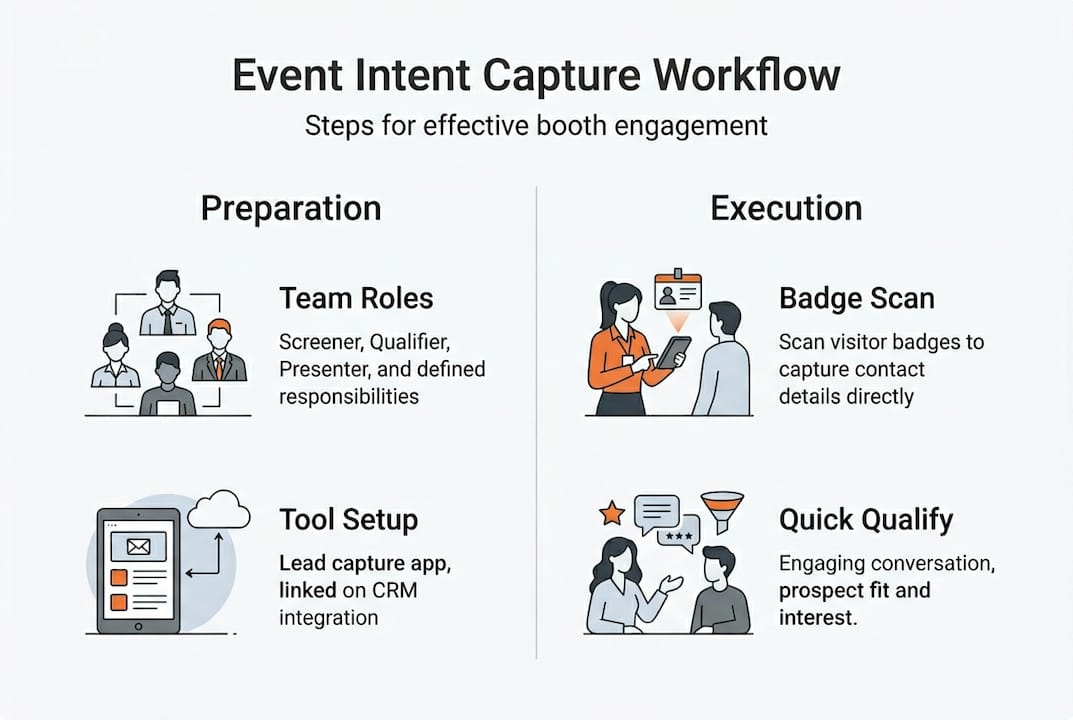
Your event is live. Attendees are flooding your booth. This is where preparation meets execution. Start with a systematic approach to collecting intent data across multiple touchpoints. Begin every meaningful conversation with a badge scan to establish identity, then layer on context through conversation notes, survey responses, and behavioral tracking.
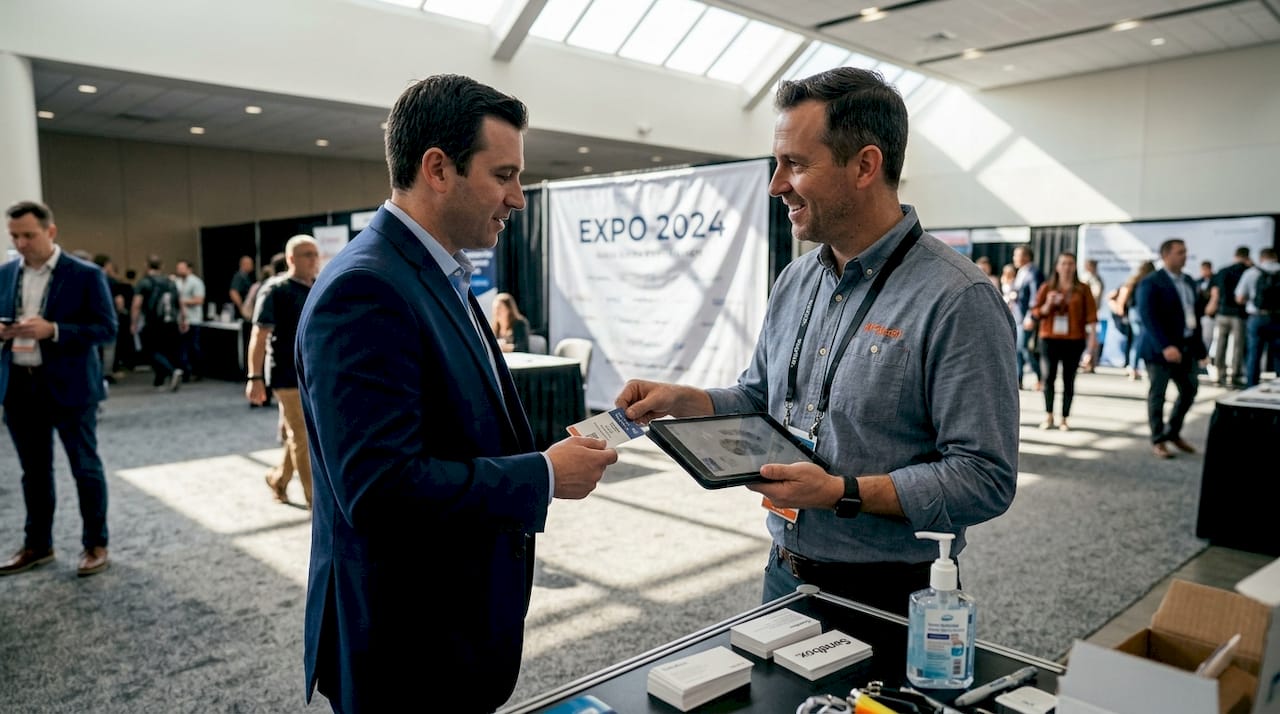
Multi-channel data collection creates the richest intent profiles. A badge scan tells you who stopped by. A quick survey reveals their product interest and timeline. Conversation notes capture specific pain points and objections. Session attendance shows topic relevance. Content downloads signal research stage. Combining these signals gives sales the context they need for effective follow-up, as detailed in event marketing workflows that drive efficiency.
Step-by-step event intent capture process:
- Scan attendee badge immediately when they enter your booth space
- Ask qualifying questions naturally during conversation, noting responses in your app
- Offer value-driven content or demos that require email confirmation
- Invite high-intent prospects to schedule follow-up meetings on the spot
- Track session attendance for prospects who registered for your speaking slots
- Monitor content engagement at interactive displays or kiosks
- Validate data completeness before the prospect leaves your booth
Balance data collection with attendee experience. Bombarding visitors with forms kills engagement. Instead, weave qualification into natural conversation. Train booth staff to listen for buying signals rather than interrogating prospects. The best intent data comes from genuine interactions, not checkbox exercises.
Confirm data quality in real time. Glance at your dashboard between conversations to verify information is flowing correctly. Check for obvious errors like missing email addresses or garbled company names. Correct issues immediately while the attendee is still present. Fixing bad data after the event wastes hours of manual cleanup time.
| Method | Data richness | Attendee friction | Best use case |
|---|---|---|---|
| Badge scans | Low | Very low | Initial contact capture |
| Conversational surveys | High | Medium | Qualifying serious prospects |
| Behavioral tracking | Medium | None | Understanding engagement patterns |
| Scheduled meetings | Very high | High | Executive-level conversations |
Critical dos and don'ts during event data capture:
- Do explain why you're collecting information and how it benefits the attendee
- Don't ask for information you already have from registration data
- Do use pre-populated forms that attendees can quickly confirm
- Don't interrupt natural conversation flow with lengthy data entry
- Do obtain explicit consent for follow-up communications
- Don't assume badge scans equal permission for aggressive outreach
Pro Tip: Apply event segmentation strategies during capture, not after. Tag prospects as hot, warm, or cold based on conversation quality and explicit interest. This real-time segmentation makes post-event prioritization effortless.
Common challenges and mistakes in event intent capture and how to avoid them
Data quality issues plague even experienced event teams. Incomplete records happen when booth staff forget required fields during busy periods. Inaccurate information results from typos, misheard names, or auto-correct errors on mobile devices. These problems compound when data flows into your CRM, creating duplicate records and confusion for sales teams.
Over-collection creates attendee frustration and damages your brand. Asking for job title, company size, department, budget authority, purchase timeline, and specific pain points feels like an interrogation. Prospects disengage or provide false information just to escape. Prioritize the three to five fields that truly matter for your follow-up strategy, then collect additional context through post-event nurture.
Poor integration between capture tools and your marketing automation platform destroys value. When intent signals sit isolated in an event app, sales can't access them during follow-up calls. Marketing can't trigger personalized campaigns based on session attendance. The data exists but remains useless. Challenges in intent data capture reduce sales and marketing efficiency if overlooked, turning potential wins into wasted effort.
Top mistakes and prevention strategies:
- Collecting data without clear follow-up plans wastes everyone's time and erodes trust
- Failing to train booth staff on qualification frameworks leads to inconsistent data quality
- Ignoring privacy regulations and consent requirements creates legal and reputational risk
- Using too many disconnected tools fragments your data across platforms
- Skipping real-time validation allows errors to multiply throughout the event
- Neglecting to assign data cleanup responsibilities means poor quality persists post-event
Poor intent capture doesn't just waste marketing budget. It actively damages sales relationships by flooding teams with unqualified leads while burying genuine opportunities in noise. B2B companies that fail to capture meaningful event signals see 40% lower conversion rates from event-sourced pipeline compared to those with systematic intent capture processes.
Avoid these pitfalls by treating data quality as a team priority, not an afterthought. Build validation into your workflows. Create simple quality checks that booth staff can perform between conversations. Assign a data quality monitor who reviews incoming records throughout the event and flags issues immediately. The small time investment during the event saves massive cleanup effort later.
How to leverage captured event intent data to boost marketing and sales
Your event ended successfully and you captured clean intent data. Now comes the crucial step: turning signals into revenue. Start by segmenting leads based on behavioral signals and explicit interest levels. Someone who attended your product demo, downloaded a technical whitepaper, and asked about implementation timelines shows dramatically different intent than someone who briefly scanned their badge at your booth.
Use marketing automation to create personalized follow-up campaigns that reference specific event interactions. Mention the session they attended, the content they downloaded, or the pain point they discussed with your team. Generic post-event emails get ignored. Contextual messages that continue the event conversation drive event conversion optimization and move prospects through your funnel.
Sales enablement becomes powerful when teams can prioritize leads based on captured signals. Provide sales with intent scores that combine multiple data points: booth dwell time, content engagement, survey responses, and conversation quality notes. A prospect who spent 15 minutes at your booth, requested a demo, and indicated a three-month purchase timeline deserves immediate attention. Someone who grabbed swag and left can wait for nurture campaigns.
Post-event engagement process steps:
- Segment all captured leads by intent level within 24 hours of event close
- Route high-intent prospects directly to sales with full context and conversation notes
- Enroll medium-intent leads in targeted nurture campaigns based on their specific interests
- Add low-intent contacts to broader awareness campaigns for long-term relationship building
- Schedule sales and marketing alignment meetings to review lead quality and refine scoring
- Track conversion rates by intent segment to validate your capture and scoring methodology
- Document lessons learned and update your playbook for the next event
Continually refine your intent capture process based on results. Track which signals best predict conversion. If demo requests convert at 35% but whitepaper downloads convert at 8%, adjust your booth strategy to drive more demo conversations. If prospects from certain sessions close faster, prioritize those topics in future events. Your intent data should inform not just follow-up but also future event strategy.
| Metric | Before optimization | After optimization | Improvement |
|---|---|---|---|
| Lead to opportunity rate | 12% | 28% | +133% |
| Average deal size from events | $47,000 | $52,000 | +11% |
| Sales cycle length | 87 days | 62 days | 29% faster |
| Cost per qualified lead | $340 | $180 | 47% lower |
Integrate event intent data with your broader account-based marketing strategy. When multiple contacts from the same company attend your event, coordinate follow-up across the buying committee. Use intent signals to identify accounts showing coordinated research behavior. These multi-threaded opportunities close at higher rates and justify premium post-event engagement investments.
Explore Sandbox solutions to maximize event intent capture
Capturing and leveraging event intent data requires more than good intentions. It demands purpose-built workflows, integrated systems, and expert guidance. Sandbox turns high-intent event moments into measurable pipeline by helping you understand who to follow up with, why they matter, and what to do next.
Our platform combines opinionated GTM workflows with hands-on execution support, connecting event activity directly to revenue outcomes. Whether you're running your first trade show or scaling a flagship conference series, Sandbox provides the systems and signal to make events accountable and worth repeating. Explore our event marketing workflows to see how leading B2B teams capture intent that converts.
Frequently asked questions
What is event intent capture and why is it important?
Event intent capture is the systematic collection of data during B2B events that signals attendees' purchase interest, research stage, and engagement level. It transforms casual booth visits into actionable sales intelligence. Without effective intent capture, you can't distinguish serious prospects from casual browsers, leading to wasted follow-up effort and missed revenue opportunities.
Which tools are best for capturing intent data at B2B events?
Badge scanners, mobile survey apps, and engagement tracking platforms are the most popular tools for B2B event intent capture. Choose based on your event size, complexity, and integration requirements. Smaller events might succeed with simple badge scanning and manual notes, while large conferences benefit from comprehensive platforms that track session attendance, content downloads, and booth interactions. Explore event marketing workflows to understand how different tools fit various event strategies.
How can I ensure the intent data captured is high quality?
Test all data capture methods thoroughly before your event and train booth staff on qualification frameworks and data entry standards. Avoid over-collection that confuses attendees or generates noisy data that sales can't use. Build real-time validation into your workflows so errors get caught and corrected while attendees are still present. Quality intent data comes from focused collection of meaningful signals, not exhaustive forms. Review lead generation strategies to understand what data truly drives B2B conversions.
What are the next steps after capturing event intent data?
Segment leads by intent level and behavioral signals within 24 hours of your event closing. Route high-intent prospects directly to sales with full conversation context and supporting data. Use marketing automation to enroll medium and low-intent contacts in personalized nurture campaigns that reference their specific event interactions. Track conversion rates by segment to validate your scoring methodology and refine future capture strategies. Learn more about conversion optimization to maximize the value of every captured signal.